

[This is a guest post by Kaitlyn Eger. Kaitlyn completed her Bachelor’s of Exercise Science degree at Youngstown State University while being a member of the track team. She has earned her Certified Strength and Conditioning Specialist certification from the NSCA and is passionate about strength and conditioning and enhancing sports performance through evidence-based coaching. She recently completed the Applied Sport Science Track of Athletic Lab Coaching Mentorship Program. She will be continuing on to her Masters at Utah State also being apart of the track team for her last two years.]
Speed isn’t just built in the weight room—it’s built through movement. An athlete can become stronger, more powerful, and more explosive, but if their sprint mechanics are inefficient, they will eventually hit a ceiling in performance. Just as proper technique is essential for maximizing strength during a lift, efficient biomechanics are critical for maximizing sprint speed. Oftentimes, a sprinter is already fast, whether you’re naturally fast or not, any athlete will want to improve their speed, and to do that you must refine how they move. By analyzing sprint biomechanics, coaches can identify technical deficiencies and make small mechanical adjustments that lead to meaningful improvements in performance. It is best to understand the background, or the “why,” of a movement before doing so; that is where science comes into play. Understanding the biomechanics behind sprinting benefits not only sprinters but also athletes in field and court sports, where acceleration and change of direction are essential. Looking at different joint angles can help find a mechanical advantage for athletes on the field during game status and prevent more injury when it comes to change of direction work. Biomechanics is the scientific study of structure, function, and motion using physics and the body’s biological systems. An article by Forte and Teixeira introduces the idea of biomechanics, focusing on “optimal economy of movement, strength, power, stability, postural alignment, range of motion and athletic performance” (Forte and Teixeira, 2023). This ties into the idea that joint angles can influence a sprinter’s speed, power, change-of-direction ability, and injury risk.
The Role of Joint Angles in Sprinting
When working with a sprinting athlete, we often evaluate different joint angles produced throughout the sprint cycle; this can then help determine any deficiencies in sprinting form and improve performance. When looking at joint angles, we can see how the knee, hip, and ankle all work in relation to each other throughout each sprint phase, providing insight into an athlete’s mechanics. For example, when the right hip is flexed, the left hip should be extended; similarly, the left arm swings forward with the elbow naturally flexed, mirroring the position of the opposite (right) leg to help maintain balance and coordinate movement throughout the sprint cycle. Specific joint angles can either help or hurt sprint performance. According to an article written by Lain Fletcher, joint angles can contribute to overall athletic performance, or in this case, speed. “To sprint faster, athletes must produce more force through the hip extensors to swing the leg backward more quickly. Greater torque increases leg speed and foot velocity, while reducing inertia allows the legs to cycle more efficiently during sprinting. During the recovery phase, keeping the leg compact with a heel-to-glute motion helps decrease rotational resistance and improves stride frequency” (Fletcher 2009).
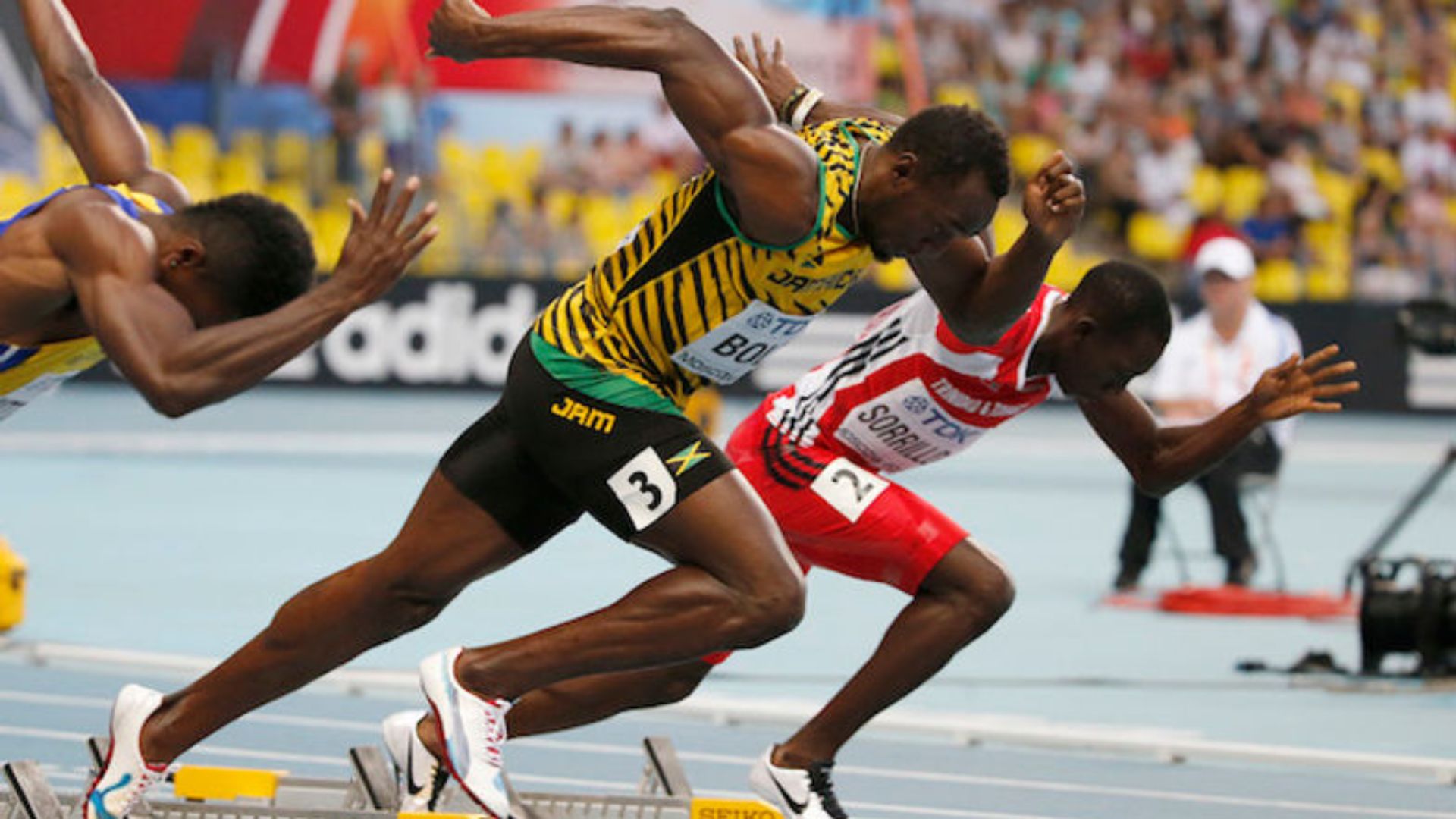
However, stride length and stride frequency must also be considered when analyzing sprint mechanics. During the recovery phase, sprinters benefit from decreasing the angle between the heel and glutes to reduce inertia and allow the leg to cycle more efficiently. This is important because the hip flexor musculature is relatively weak compared to the powerful hip extensors. If the athlete failed to recover the heel and instead kept the leg relatively straight while the leg was behind the body (referred to as backside mechanics), it would require much more effort to swing the limb forward, slowing down stride frequency and overall sprint speed.
Fletcher also highlights two additional key takeaways regarding sprint mechanics. He explained how in the support phase of the running motion, athletes should step underneath their center of mass instead of reaching ever so slightly in front of them. The goal of this motion is for the athlete to step underneath their center of mass so they can apply force backward into the ground and project themselves forward more efficiently. Conversely, if an athlete overstrides, it will produce a braking motion. The idea of a pawing action has been studied more in depth, but rather than intentionally pawing down to the ground and actively pulling back with the hamstrings, athletes should focus on stepping directly under their center of gravity. This allows the athlete’s momentum to push them forward while still achieving hip extension to cycle the next leg through efficiently (Fletcher 2009).
Joint Angle implications for the Musculotendinous Unit
Another major takeaway from Fletcher’s article was the concept of muscle-tendon unit (MTU) stiffness, which works alongside muscle stiffness in terms of elasticity, allowing for a more powerful output during exercise. If one athlete does not have that ideal leg stiffness, then you can imagine their legs turning into Jell-O; if that were to happen, they would relax and become lower to the ground during running. Because the athlete is lower to the ground, their center of gravity is lowered, which can reduce stride length and ultimately decrease sprint speed if stride frequency does not increase to compensate. They would tend to be slower because the individual now must push up through their body and forward/out. Examining the joint motions further, power is produced within the hip; the knee is used as a stabilizer and to convey power between the knee and ankle; the ankle is already dorsiflexed in that toe-up position, keeping the calf pre-stretched. With the calf being pre-stretched, it keeps the stiffness and prepares the body for the stretch-shortening cycle. More simply, the calf is pre-stretched, removing slack from the muscle-tendon unit before ground contact. This allows force to be applied immediately as the foot lands, while the tendon stores and releases elastic energy throughout the sprint cycle. (Fletcher 2009).
Joint Angle and Starting Power
Regarding power production, a study done by Milanese and collaborators researched the impact of different joint angles of the rear leg in a starting block position for sprinters. The researchers tested collegiate level sprinters; Each athlete ran 10 attempts at three different knee joint angles (90°, 115°, and 135°). Researchers measured push-off angles, the power used to push off the rear foot, the speed at which they pushed off, and more. After running the test, the following results were gathered:
| Pushing phase | 90° | 115° | 135° |
| Block Time (s) | 0.354 ± 0.015 | 0.348 ± 0.016 | 0.355 ± 0.01 |
| PTRB (s) | 0.12 ± 0.01 | 0.11 ± 0.01 | 0.09 ± 0.02 |
| PTRB (%) | 34.62 ± 3.60 | 31.30 ± 3.52 | 28.65 ± 3.5 |
| VblockMean (m·s-1) | 1.44 ± 0.11 | 1.43 ± 0.08 | 1.36 ± 0.06 |
| F Impulse (N·s) | 175.00 ± 26.4 | 9 172.00 ± 25.4 | 9 168.35 ± 25. |
| 90° | 115° | 135° | |
| FSV (m·s-1) | 2.69 ± 0.31°§ | 2.61 ± 0.27 | 2.58 ± 0.30 |
| FSL (m) | 1.23 ± 0.12 | 1.22 ± 0.11 | 1.21 ± 0.13 |
| SSV (m·s-1) | 3.66 ± 0.29°§ | 3.63 ± 0.25 | 3.59 ± 0.29 |
| SSL (m) | 1.96 ± 0.17 | 1.94 ± 0.12 | 1.93 ± 0.17 |
| 90° | 115° | 135° | |
| Block clearance | |||
| BCH (m) | 0.82 ± 0.05 ^ | 0.82 ± 0.04 ^ | 0.81 ± 0.04 |
| BCV (m ·s-1) | 2.67 ± 0.26°§ | 2.62 ± 0.23 | 2.56 ± 0.24 |
| PA (°) | 40.42 ± 2.74 | 40.23 ± 2.13 | 39.77 ± 2.50 |
Key:
BLOCK TIME (s): Duration of Event
PTRB (s): Pushing Time on the Rear Block
PTRB (%): Percent of Pushing time on Rear Block
VblockMean (m·s-1): average velocity of center of mass during pushing phase
F Impulse (N·s): average force impulse
FSV (m·s-1): First Stride Velocity
FSL (m): Distance between takeoff from block and first foot
SSV (m·s-1): Second Stride Velocity
SSL (m): Distance between takeoff from block and second foot
BCH (m): Height of Center of Mass
BCV (m ·s-1): Block Clearance Velocity
PA (degrees): Push off Angle
______
The 90° rear knee angle in the starting blocks produced higher pushing time on the rear block (PTRB) and %PTRB values compared to the 115° and 135° conditions. Alongside PTRB, another important metric is PTRB%, which represents the percentage of the total block pushing phase spent applying force through the rear leg. These findings suggest that a smaller rear knee angle allows the rear leg to contribute more to acceleration during block clearance, resulting in a more powerful sprint start (Milanese et al., 2014). Although many of the measured variables showed only small differences between conditions, PTRB and PTRB% demonstrated some of the most notable changes. In particular, the 90° condition showed approximately a 5–6% increase in rear leg contribution compared to the larger knee angles, suggesting a greater ability to generate horizontal propulsion during the start phase. The other value that had stuck out more was the BCV, or block clearance velocity, which refers to the horizontal velocity of the athlete’s center of mass from pushing out of the blocks. While the differences were modest, athletes using a 90° rear knee angle produced the highest block clearance velocity (2.67 m/s), compared with 2.62 m/s at 115° and 2.56 m/s at 135°. These findings support the use of smaller starting angles, as athletes using a 90° rear knee angle projected themselves from the blocks at a velocity of 2.67 m/s, whereas those using a 135° angle reached only 2.56 m/s. A higher block clearance velocity allows athletes to cover more ground resulting in faster times. This principle also applies to team sports, where greater acceleration following a change of direction lets athletes push out and reach the ball faster. Overall, these findings consistently favored the 90° rear knee angle, suggesting that a smaller rear knee angle may improve an athlete’s ability to generate a faster and more effective block exit.
The Role of the Hamstrings
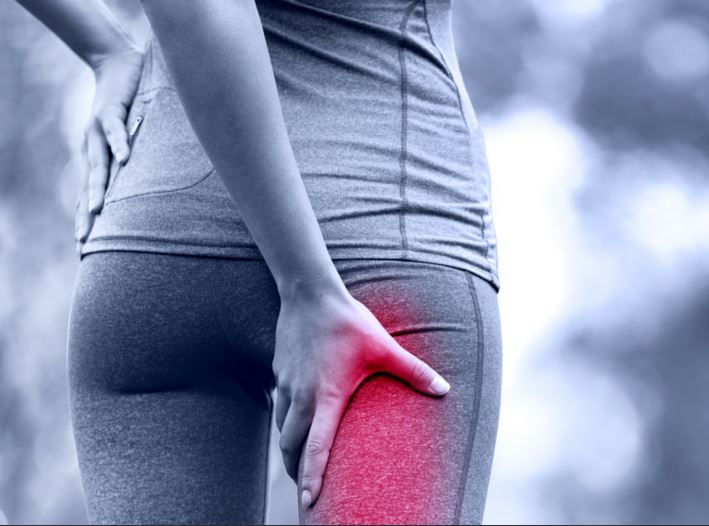 The role of the hamstrings is especially important during upright sprinting. Prior research has examined the relationship between hamstring elongation stress during running and injury risk. To quantify elongation stress, researchers subtracted the knee flexion angle from the hip flexion angle. This measurement allows researchers to estimate hamstring length and determine the amount of stress placed on the muscle at specific joint angles. This explains why athletes train the hamstrings through multiple ranges of motion to make sure the hamstrings stay healthy. In many sprinters, this is when you see hamstring pulls since they are trying to produce a peak force when it’s at an angle that the body cannot support. Based on this article, the higher Elongation Stress on Hamstrings (ESH) values indicate greater hamstring elongation and stress, which may increase injury risk. For example, if hip flexion and knee flexion are both 90°, the hamstrings experience minimal elongation. However, if hip flexion remains at 90° while knee flexion decreases to 45°, the hamstrings are stretched further, resulting in greater stress and a higher potential for injury (Valle et al., 2015).
Best Exercises for Hamstrings of Sprinters
Recent research by Breed et al. suggested that the RDL and the unilateral hamstring bridge produced the greatest force and stretch demands most closely resembled those related to sprinting (Breed et al., 2026). Overall, the RDL exercise produced the greatest peak in the biceps femoris long head (BFlh), compared to the other hamstring muscles. The BFlh is the muscle most stretched during sprinting and through the use of EMG and motion capture technologies let researchers study the force and stretch of each individual hamstring muscle. With that knowledge, several exercises were tested with a focus on the hamstring muscles to see which ones can correlate the best to sprinting forces and stretch needed in those muscles. Previously said, the RDL and the unilateral hamstring bridge are most correlated compared to sprinting using all three hamstring muscles. The RDL portrayed the most force in the BFLH and the semimembranosus (SM). Walking and hip thrusts produced the least force and stretch demands (Breed et al., 2026).
For athletes aiming to improve hamstring strength and reduce injury risk, recommended exercises include the Romanian Deadlift (RDL), and unilateral hamstring bridge, unilateral hip extension, and Hamstring Roll Outs, etc. All of these are good exercises because the goal is to keep one angle constant while the other can move through its Range of Motion (ROM) but can still feel that stretch in the muscle. Starting with smaller loads and progressing throughout a full range of motion prior to adding resistance can help strengthen the hamstrings while prepping them for the higher demands required of the body when sprinting.
Athletes who want to improve sprint performance should pay close attention to sprint mechanics, specifically joint angles throughout the running cycle. Although a 90° rear knee angle is recommended only during the block start, efficient joint angles throughout the remainder of the sprint are equally important for performance and injury prevention. We saw through several articles that joint angles are necessary throughout the push-off phase from the blocks, the cycling/ push phase of the sprint, and following through the sprint to propel oneself forward to achieve better times. Doing so allows for better positioning of the hips, knees, and ankles, allowing better acceleration, stride efficiency, and injury prevention. Focusing on sprint mechanics through resistance training and field work can enhance an athlete’s abilities while staying healthy for sport.
Key Takeaways:
- Sprint speed is heavily influenced from biomechanics and joint angles
- Proper foot strike and leg stiffness is crucial to sprint speed/ acceleration
- Hamstring injuries are linked to elongation stress
- Strength training is encouraged for more sprint specific joint angles
References
- Breed, R., Hulm, S., Thomas Hickey, J., Gregory Timmins, R., Opar, D., George Banyard, H., & Maniar, N. (n.d.). Hamstring force and stretch during progressively increasing running speeds and the eccentric phase of resistance training exercises commonly used for injury prevention and Rehabilitation | British Journal of Sports Medicine. https://bjsm.bmj.com/content/60/6/420. Accessed 23 July 2026.
- Fletcher, Lain. Biomechanical Aspects of Sprint Running. Professional Strength & Conditioning, issue 16, Winter 2009, pp. 20–23, uksca.org.uk. PDF download. Accessed 23 July 2026.
- Forte, Pedro, and José E. Teixeira. “Exercise Biomechanics for Health: Evaluating Lifelong Activities for Well-Being.” Healthcare, vol. 11, no. 6, 21 Mar. 2023, p. 901. PubMed Central, pmc.ncbi.nlm.nih.gov/articles/PMC10048551/.
- Milanese, C, Bertucco, M, Zancanaro, C. The Effects of Three Different Rear Knee Angles on Kinematics in the Sprint Start. Biology of Sport, U.S. National Library of Medicine, Aug. 2014, pmc.ncbi.nlm.nih.gov/articles/PMC4135065/.
- Valle, Xavier, et al. Hamstring Muscle Injuries, a Rehabilitation Protocol Purpose. Asian Journal of Sports Medicine, U.S. National Library of Medicine, Dec. 2015, pmc.ncbi.nlm.nih.gov/articles/PMC4691307/.













Leave A Comment