

 [This is a guest blog by Katherine Perille. Kat holds an MS in Kinesiology with a concentration in biomechanics. She is completing a Sports Science Mentorship at Athletic Lab.]
Current training programs and sport practices focus solely on skill development and neuromuscular training; however, there is something to be said about adding neurocognitive tasks to day-to-day sport practice. According to Dr. Michele LaBotz, the goal of neuromuscular training is to improve muscular strength and connections, increase awareness of an individual’s technique and the ways in which their bodies move [1]. Neuromuscular training is also all about improving performance while lowering injury risk. All ages and all levels can benefit from neuromuscular training where agility, balance, and speed are emphasized [1]; however, there is another element that can be added that can be beneficial for athlete’s performance and injury reduction rates: neurocognitive training.
During game-like conditions, an athlete does not have the time or mental capacity to focus strictly on performing a run-to-cut maneuver. Their attention is on what is going on around them and less on what is happening to them. There is little to no ability to ensure proper running and cutting movement. If you were to think about a soccer game… you have the ball and there is an oncoming defender. You need to make the decision of whether you are going to cut around the defender or pass the ball. During this time, you may be getting verbal cues from your teammates telling you where to go and/or where to pass the ball. You are thinking about everything around you except the proper way to perform a safe and efficient run-to-cut maneuver. The integration of neuromuscular and neurocognitive training can better prepare athletes for the scenarios they experience during training sessions and games. If the body can be better trained in vulnerable positioning, risk of injury may decrease.
Neuromuscular Training
 Neuromuscular training is important and can have significance in the reduction of the risk of injury. Dr. Joseph Janosky says that injury rates in youth sports such as soccer, basketball, football, and lacrosse can be reduced by as much as 80% when neuromuscular training is introduced [2]. The addition of this type of training in running and cutting-heavy sports has seen a reduction in injury mechanisms found most commonly in lower body injuries; more specifically, anterior cruciate ligament (ACL) injuries [3,4,5]. Neuromuscular training is common in current day-to-day practice; however, the addition of neurocognitive training can provide athletes with a training environment better suited to the dynamic sporting environment.
Neurocognitive Training
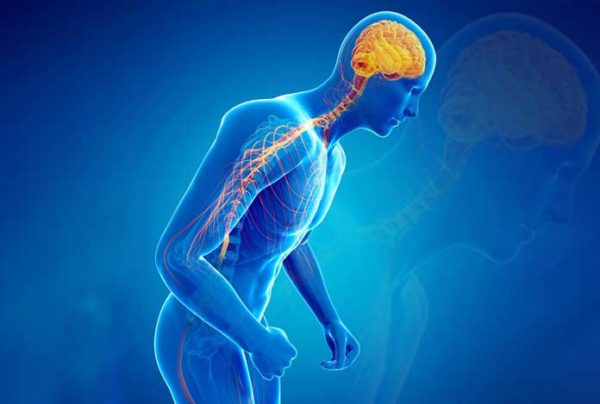
Neurocognitive training aims to add to neuromuscular training using neurological components such as reaction time, processing speed, dual tasking, focus of attention, visual-motor control, and environment interaction [6]. Decision making in a sport is almost always unanticipated and reactive and there are always complex environmental interactions that an athlete needs to respond to. An athlete is placed under many different constraints. Constraints involve time sensitive processing information or even just the environment that the athlete is playing in. They can be meaningfully manipulated or can be unintentionally changed. The athlete may need to quickly perform a maneuver to evade an oncoming defender or quickly change direction to keep up with the run of play. There are various other constraints that an athlete experiences during competition: weather and field conditions, time and distance traveled for a game, who is out on the field/court, etc. The addition of neurocognitive training with neuromuscular training can prepare athletes in a way that is less prevalent in sport training right now.
In a podcast, Tania Spiteri discusses research that has shown that as soon as you add a decision making element into sport, it changes the body’s biomechanics, specifically the kinetics, kinematics, and muscle activation strategies [11]. The change in the body’s biomechanics can put athletes of all ages and skill levels at risk of injury. While including the fundamentals are important in sport practice (movement competency, developing strength, power, and speed), decision making and reactive training should also be incorporated into every day skill acquisition [11].
Motor Learning & Phases of Learning

CARY, NC – APRIL 10: Debinha #10 of the North Carolina Courage takes a corner kick during a game between Washington Spirit and North Carolina Courage at Sahlen’s Stadium at WakeMed Soccer Park on April 10, 2021 in Cary, North Carolina.
There are three phases of motor learning according to Fitts and Posner that can be utilized to track progress of athletes: cognitive, associative, and autonomous [7]. In the cognitive phase, the main goal of training is the basic development of neuromuscular control, often the basis of injury prevention programs [8]. At this stage of training, there are limited neurocognitive challenges and there are often verbal and visual cues to the athletes ensuring proper development and improvement. Focus for neurocognitive training would be on the associative and autonomous phases. In the associative phase, there is an increase in neurocognitive challenges where there is less focus on the foundational movement. At this stage of training, the attention is placed on a separate task such as a visual stimulus or mental task while still completing the physical task at hand.
The autonomous phase best mimics the dynamic sporting environment that athletes participate in. During the autonomous phase, separate cognitive task complexity increases while there is still a physical task to be performed. A key to this phase is that the neuromuscular task is still upkept even as neurocognitive task complexity increases. There are often three phases embedded in the autonomous phase: visual search, working memory, and reactive exercise execution [8]. An example of these three phases within the autonomous phase would be the performance of a running and cutting maneuver in response to a visual stimulus. If the visual stimulus showed two different colors (red and blue), the individual would be asked to cut to the right when the light lit up red and left when the light lit up blue. This would force the individual to search for the color, remember which color means which direction, and react and cut to the correct visual stimulus. This phase best mimics the ever changing, sporting environment where an athlete must take in the surrounding visual stimuli, process it and understand what it means, and implement it to react to the environment. Achievement in the autonomous phase allows individuals to perform complex tasks with little thought which can free up cognitive space to focus on higher-level demands of the activity.
There have been studies that have found links between neurocognitive deficits and injury risk [9,10]. When reaction time or visual processing are seen to be linked to biomechanical risk factors of ACL injuries, it is important to explore the connection between neurocognition and neuromuscular control. When an athletes’ cognitive attention is placed somewhere else, injuries can occur that may have been preventable if training focused on both the neuromuscular and neurocognitive side of things. A baseline framework for the combination of both of these things can prove important in training programs and injury prevention programs. Current injury prevention programs, specifically for ACLs, include neuromuscular control training and movement patterns during cutting, jumping, and pivoting [8]. Research and data suggests that clinicians consider how the integration of neuromuscular and neurocognitive training can contribute to overall athletic performance as well as injury prevention programs. Current injury prevention programs focus on the mechanics of isolated movements but these do not transfer well to the demands of a sporting environment.
Integrating Neurocognitive Tasks into Training
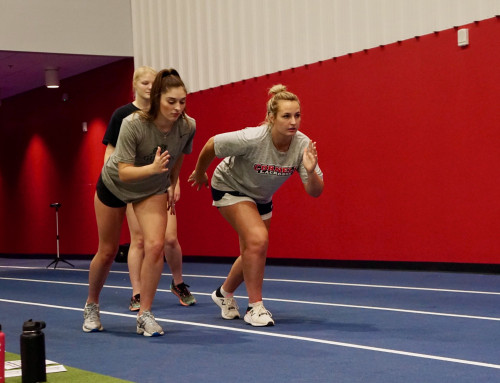
 So, what can be done to implement neurocognitive tasks into everyday training scenarios? An example could be setting up an agility drill for the athlete and asking them to navigate the drill while also asking them to memorize and call out a sequence of numbers or colors. Another example would be creating a running and cutting environment where the coach holds up one colored cone in one hand and another color in the other where the cone colors tell the athlete which way (to the right or to the left) to cut. As the athlete approaches, the coach holds up the cone and the athlete must respond to the color and correctly cut to the right or the left. By adding in varying amounts of pressure to simple drills, the task complexity can increase. The pressure added to a drill provides external stimuli that an athlete has to take in and react to. A cognitive task doesn’t just have to be an external drill like adding in things such as cognitive recall, mathematical tasks, or random-sequence reaction drills; it can also be changing up the physical environment (changing up angle of shooting and positions, reacting to the cut of an oncoming offensive player, etc.).
By mimicking the demanding sports environment, athletes can be better equipped to perform at their best while also doing it in a safe and efficient manner. While neuromuscular training is important and should be a focus within practice, the addition of neurocognitive tasks adds to the complexity seen within sport. The goal of neurocognitive training goes beyond simple task completion and instead challenges the athlete in a way that is less common but of high importance.
In order to properly implement neurocognitive training, clinicians and/or coaches need to manage their athletes’ demands and loads. Eventually, the goal is to progress to more complex challenges/movements; however, it is important for these to be monitored and tailored to teams and individual athletes. Once proper neuromuscular control has been achieved at one phase, the individual can progress to a more advanced aspect of neurocognition. Throughout the process of increasing task complexity, neuromuscular control needs to be watched, understanding that variability is going to occur, but coaches/clinicians/trainers need to make proper judgment as to what they deem as appropriate or safe to move onto the next stage. Once the highest level of neurocognition is reached, it is important for the athletes to still be closely monitored and challenged appropriately.
Summary
Current training programs in sports heavily emphasize skill development and neuromuscular training to enhance performance and reduce injury risk; however, incorporating neurocognitive tasks into daily practice can further benefit athletes by preparing them for the dynamic environments they encounter during competitions. During game-like conditions, athletes must make quick decisions and respond to external stimuli, which can alter their biomechanics and increase injury risk. Integrating neuromuscular and neurocognitive training helps athletes develop automatic responses to these stimuli, thereby enhancing performance and reducing the likelihood of injury. By practicing in environments that mimic actual game scenarios, athletes can better manage the cognitive and physical demands of their sport. Neurocognitive training can be effectively implemented through drills that combine physical tasks with cognitive challenges and these exercises can enhance athletes’ ability to process information quickly and execute movements safely and efficiently. A comprehensive approach to training can help athletes achieve optimal performance while minimizing the risk of injury, ultimately leading to more effective athletic development.
References
- Neuromuscular training: What is it and how does it work. TrueSport. (2020, October 27). https://truesport.org/preparation-recovery/neuromuscular-training/
- A guide to neuromuscular training. Hospital for Special Surgery. (2023, July 19). https://www.hss.edu/article_neuromuscular-training.asp
- Hewett, T., Stroupe, AL., Nance, TA., Noyes, FR. (1996). Plyometric training in female athletes: decreased impact forces and increased hamstring torques. Am J Sports Med, 765-773
- Hewett, T., Lindenfeld, RN., Riccobene, JV., Noyes, FR. (1999). the effect of neuromuscular training on the incidence of knee injury in female athletes: a prospective study. Am J Sports Med, 699-706.
- Hewett, T., Myer, GD., Ford, KR., Heidt, RS., Colosimo, AJ., McLean, SG., Bogert, AJ., Paterno, MV., Succop, P. (2005). Biomechanical measures of neuromuscular control and valgus loading of the knee predict anterior cruciate ligament injury risk in female athletes. The American Journal of Sports Medicine, 492-501.
- Bullock, J. (2022, July 21). What is neurocognitive training and how do I use it?. Knowledge is Power. https://blog.teambuildr.com/what-is-neurocognitive-training-and-how-do-i-use-it
- Fitts, P. M., & Posner, M. I. (1967). Human performance.
- Walker, J. M., Brunst, C. L., Chaput, M., Wohl, T. R., & Grooms, D. R. (2021). Integrating neurocognitive challenges into injury prevention training: a clinical commentary. Physical therapy in sport, 51, 8-16.
- Swanik, C. B., Covassin, T., Stearne, D. J., & Schatz, P. (2007). The relationship between neurocognitive function and noncontact anterior cruciate ligament injuries. The American Journal of Sports Medicine, 35(6), 943e948. https://doi.org/ 10.1177/0363546507299532
- Wilkerson, G. B. (2012). Neurocognitive reaction time predicts lower extremity sprains and strains. International Journal of Athletic Therapy & Training, 17(6), 4e9. https://doi.org/10.1123/ijatt.17.6.4
- Pacey, R (Host). (2023, October 19). Developing perceptual-cognitive factors to improve agility performance with Tania Spiteri [Audio podcast episode] In Pacey Performance Podcast.







Leave A Comment