

 Our minds have a huge capacity in determining our muscles success during an exercise. While we all know that muscle movement is initiated by the brain, did you also know you can influence this output by focusing your attention on certain aspects of the movement. Have you noticed when you are trained by a coach they will try to have you focus on certain characteristics of the exercise?
Typically, these attentional cues fall into two categories: Internal cues and external cues. Internal cues place the athlete’s attention on their body movements1. For example, during a squat a coach may say, squeeze your glutes as your reach the peak of your squat. With this, we see that internal cues focus the athlete’s attention on the muscle utilized in the movement. External cues, on the other hand, direct the athlete’s attention to the movement’s effect on the environment. Something as simple as “drive the bar up” could be used as an external cue for our squatting scenario. Therefore, external cues tend to point out the goal the exercise wants to accomplish2.
Surprisingly, studies have shown that these cues have different effects on the muscle and its ability to complete the movement. In addition, studies have shown a difference in the type of cues elite athletes use compared to amateurs. My goal in this post is to examine the research, and then discuss how using different types of cues can change the focus of an exercise.
In terms of resistance training, studies point to external focus producing a more efficient neuromuscular system3. Marchant et al. studied the effects external and internal cues had on electromyography (EMG) readings of the bicep during a bicep curl. They found that external focus produced greater force while simultaneously generating a lower EMG reading. This suggests that external cues led to more efficient recruitment of muscle units compared to internal cues. From the internal cue perspective, it seems the focusing of one’s attention on the muscle resulted in over-activation of the muscle, not required to successfully complete the movement. When you apply this to an athlete’s training, it seems internal cues will lead to muscle fatigue before external cues, thus reducing the amount of reps and sets the muscle can complete. In the end, this will lower the volume of the resistance training session. External cues, as a result, allow for a better training session, which will lead to greater improvements in strength gains. Marchant et al. confirmed this in another study, that showed external focus led to greater reps to failure.4 Therefore, when coaching a trained athlete on a familiar exercise, getting them to focus on external goals of the movement appears superior to utilizing interior cues.
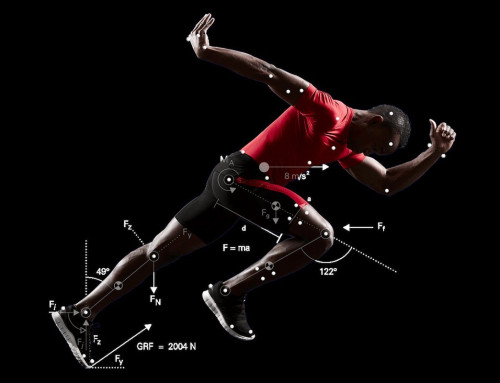
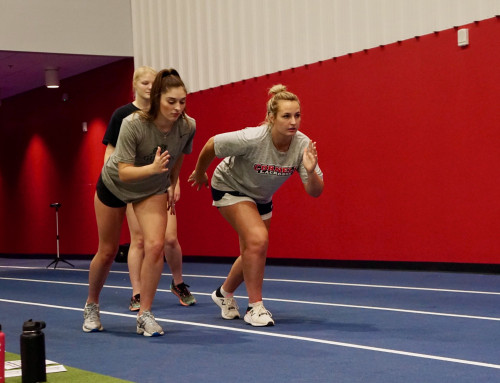
Now lets consider how attentional focus can affect running training. Porter et al. found similar results to those of resistance training.3 When instructed to sprint 20 meters using an external focus technique, participants ran faster than in trials utilizing internal cues. It seems that this cue was useful only to low- and moderately-skilled participants, where the improvement in sprinting technique via the cue led to the faster times. With elite sprinters, however, the same external cue did not produce faster times compared to the internal cue. Instead, a neutral cue, one that focuses attention away from the movement like “run as fast as you can”, produced the best result. It’s thought this is because the sprinters already followed optimal sprinting technique. Remember though, one thing agreed upon across the board was that internal cues led to slower times, and therefore should be avoided when coaching the sprinter. An interesting contrast appears when examining distance runners. When asked in Morgan and Pollocks study, elite distance runners responded that they focus on monitoring their efforts while amateurs attempt to distract themselves.7 Therefore, elite runners naturally utilized internal cues while amateurs used neutral cues. One reason for this is amateur distance runners try to forget about the pain and focus on something else. This contradicts Schucker et al. who found that skilled runners who externalized their attention showed better running economy based on VO2.5 Using this fact, it seems a coach can improve an elite distance runner’s ability by switching their attentional focus externally instead of internally. Since they already understand proper running technique, monitoring their movements may in fact quicken the onset of fatigue. In conclusion, when training both sprinting and distance runners internal cues should be disregarded, and when sprinters employ optimal sprinting technique, external cues that do not direct their attention to technique and neutral cues seem to be the most favorable.
Finally to discuss agility training, we again see that external focus leads to greater improvements. In another Porter et al. study, participants ran an agility “L” test.6 They were externally cued with, “focus on running toward the cone as fast as possible,” and told to push off the ground as hard as possible when turning. In the internal trial, the participants were told to focus on moving their legs as quick as possible and to plant [their] foot as firmly as possible when turning. Porter et al. found that the external cues produced faster times than the internal cues. One possible reason for this is how the external goal focuses on completing the task more than the internal task. By getting to each cone as quickly as possible, the task will be completed as quick as the athlete can do so; whereas if the legs are moving fast, that doesn’t necessarily complete the task in the quickest manner. Therefore, the external cues push the athlete to complete the task quicker. One situation where an internal cue may be important is when an athlete’s performance plateaus. At this point, a certain position or stance used by the athlete may need to be altered in order to optimize performance. For example, getting lower when going around corners to alter center of gravity. Once this technique is learned, utilizing it under external focus should lead to improvements in agility time.
Overall, it seems most studies promote the use of external attentional focus. However, as we saw earlier, internal cues do have a place in coaching. In what other cases? would you use internal focus then? Something I hear a lot with resistance training is, or “where should I be feeling this” With inexperienced clients, it’s important they activate the desired muscles to complete the exercise. For example, we don’t want the major muscle in a pull-up to be the bicep. Therefore, internal focus can help produce the correct movement by executing the correct sequence of joint angles. For one thing, this will prevent the overuse of favored muscles, like the biceps during a pull-up. This can also affect the athlete fatigability; where, since the biceps are not as strong as our back, the athlete will not be able to complete the desired sets and reps. In addition, internally focusing on the muscle during exercise movements teach the neuromuscular system how to fire its commands correctly. This goes along with completing the exercise with the correct sequence of joint angles. To go along with our pull-up example, the coach could ask the athlete to focus on medially rotating the scapula by dropping their shoulders during the concentric phase or think about touching their elbows behind their back. Once the movement has been learnt, the coach can then have the athlete focus externally.
Internal focus can also be utilized in running training to improve form during a plateau. In sprinting, many athletes have trouble driving their knee up and keep their leg prominently in the anterior region of the body. Instead, they tend to have larger posterior butt kick style running. When this technique starts hindering performance when max sprinting speeds have been reached, a coach should have the athlete internally focus on that feeling of a high knee. Once this movement becomes learnt, external focus with the improved technique should enhance performance. The same can be said with distance runners. A technique with bad running economy, like flailing arms or stiff muscles, may prevent the athlete from improving their times. As such, once a plateau is reached those techniques should be focused on using internal cues, allowing the athlete to internalize and learn the correct movements. While external focus does seem to induce better performance scores, internal focus can help the athlete learn a movement to allow continued improvements.
What’s also great about attention cues is that if the coach provides a specific set for each exercise, the athlete basically has a bank of instructions in mind when they train alone. Instead of forgetting about the pain and distracting themselves from the effort, the athlete can focus on one of the cues in their bank to help improve their performance. For myself, I’ve definitely found that internal cues are important when I’m unsure about the movement and want to activate the right muscle; and once I’ve accomplished that, external focus does help to motivate me to reach the goal of the movement. To sum everything up, attentional cues are a highly influential factor in coaching that, when used in the right scenarios, can generate significant improvement to the athlete’s performance.
References
- Beardsley, C. (2013, April 17). How much difference do external cues make?. In Strength and Conditioning Research. Retrieved from https://www.strengthandconditioningresearch.com/2013/04/17/external-cues/
- Winkelman, N. (n.d.). Hot Topic: What we say matters, Part I. In National Strength and Conditioning Association. Retrieved from https://www.nsca.com/Education/Articles/Hot-Topic-What-We-Say-Matters-Part-I/
- Makaruk, H., & Porter, J. M. (2014, May 23). Focus of Attention for Strength and Conditioning Training. Strength and Conditioning Journal. Retrieved February 4, 2015, from https://www.researchgate.net/publication/257307174_Focus_of_Attention_for_Strength_and_Conditioning_Training
- Marchant, D. C., Greig, M., Bullough, J., & Hitchen, D. (2013, January 23). Instructions to Adopt an External Focus Enhance Muscular Endurance. Research Quarterly for Exercise and Sport, 82(3), 466-473. Retrieved from https://www.ncbi.nlm.nih.gov/pubmed/21957705
- Schuker, L., Hagemann, N., Strauss, B., & Volker, K. (2009, October 21). The effect of attentional focus on running economy.Journal of Sports Sciences, 27(12). Retrieved from https://www.ncbi.nlm.nih.gov/pubmed/19787539
- Porter, J. M., Nolan, R. P., Ostrowski, E. J., & Wulf, G. (2010, November 29). Directing Attention Externally Enhances Agility Performance: A Qualitative and Quantitative Analysis of the Efficacy of Using Verbal Instructions to Focus Attention.Frontiers in Psychology, 1. Retrieved fromhttps://www.ncbi.nlm.nih.gov/pmc/articles/PMC3153821/
- Morgan, W. P., & Pollock, M. L. (2006, December 16). PSYCHOLOGIC CHARACTERIZATION OF THE ELITE DISTANCE RUNNER. Annals of the New York Academy of Sciences, 301, 382-403. Retrieved from https://onlinelibrary.wiley.com/doi/10.1111/j.1749-6632.1977.tb38215.x/abstract











Leave A Comment