

[This is a guest blog by Caleb O’Brien who is a recent graduate from Appalachian State with a bachelor’s in exercise science. He grew up playing soccer his whole life, competing in the US Youth National League. He is currently taking part in the Athletic Lab Coaching Mentorship program.]
 Strength and power are often two terms that people throw around in the gym interchangeably. While both affect how well a lift is accomplished, they are not the same. Strength measures how much force your muscles can produce. Power, sometimes referred to as explosive strength can be described as the amount of work performed over a given period of time. The main factor that differentiates the two is that power accounts for the amount of time it takes to overcome the resistance. The variable of time refers to how quickly, or the speed at which an individual can execute the movement. In layman’s terms, power is the product of two key components; speed and strength.
Outside of the technical differences within each of their respective definitions, the application of either strength or power heavily influences how one trains and formulates a program to favor one more so over the other. Three important variables that scope any training program and especially strength training are intensity, volume, and frequency. Intensity, simply put, is the amount of energy required per unit of time. Intensity can be measured by a handful of methods, such as RPE (rating of perceived exertion) and RIR (reps in reserve), which are two quick simple ways to gauge an individual’s intensity day to day. Basing intensity off percentages of 1RM or rep maxes is a great way to hone in on what an athlete’s working weight should be. This percentage can give insight into how to manipulate training to focus on certain aspects of athletic development. Volume refers to the total amount of work that is performed, encompassed by the number of sets, reps, and total exercises completed within a workout. Frequency is how often the training sessions are scheduled to reoccur within a week, accounting for the appropriate amount of rest in between each workout endeavor. These three variables are molded and manipulated to maximize outcomes and to reach the specific goals of an individual.
Strength Training
Keeping these variables in mind, the idea of strength training can take many different forms to accomplish the same goal. All forms of strength can be guided by the same principle that propels them in the right direction – strength training involves repeated overloading of a group of muscles. This idea of overloading a muscle for increases in output is encompassed by the principle of progressive overload. Progressive overload is a pillar in seeing progress in training outcomes. An athlete needs to increase the intensity, volume, or type of workout systematically to see adaptations. By altering these variables, the athlete is applying a stimulus to the body with incremental stress over time, which forces the body to adapt and grow, thus producing overall improvement.(1)
By looking into the physiology of strength, a coach can better plan and manipulate training stimuli to address specific areas where improvement is warranted for the particular sport. Understanding muscle fiber types is one way to hone in on what exactly you are training. Type 1 is thought of as the slow twitch endurance activity-focused muscle fibers. They have longer activation, force development, and relaxation times. Also, type 1 fibers are smaller and have a lower potential output, but are fatigue resistant, making them ideal for those long distances. On the opposite end of the spectrum, type 2 are fast twitch fibers utilized for quick explosive activities. These fibers have faster activation, force development, and relaxation time. They are larger and have higher output, but they fatigue very quickly. Type 2a is an intermediate subgroup that is closer to type 1 in expression than type 2x which is the fastest, largest, and most powerful out of all the muscle fibers.
Strength can be seen as the foundational layer when it comes to basic training and general improvements at the beginning of an athlete’s training cycle. Strength underpins many other physical qualities and more often than not, precedes a power block. Along with strength, four main biomotor components contribute to performance, such as speed, mobility, skill, and endurance. All of these should be developed through training to improve performance. Power is not identified as one of the five biomotor components because it combines strength and speed. Strength and speed can be thought of as the fundamental building blocks, while power sits on top of them. So, by increasing strength, an individual’s power output will increase up until a certain point. Once the threshold of strength is reached, a greater emphasis on speed strength-related qualities should take priority in training. Therefore, a proper training regiment should address strength and speed characteristics so that power can be adequately improved.
Power Training
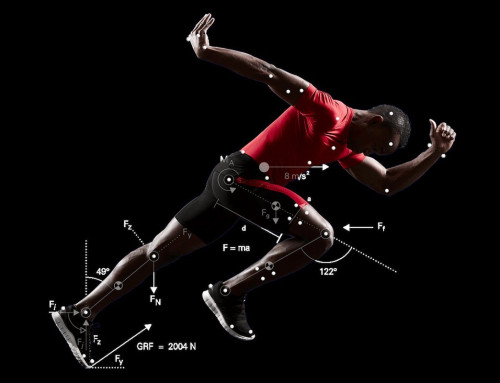
 To reiterate, power can be best described as the ability to produce as much force in as short a period of time as possible. Power is thought of as the most important quality when it comes to athletic performance. The gap between large physical differences starts to diminish as an athlete progresses through the ranks, toward the top level. Elite athletes need to take into consideration every aspect of training to be able to set themselves apart from the competition. With marginal differences in areas such as strength levels, technique, and skill, the only variable that can truly set someone apart from another player is how fast they can utilize these abilities. This is where power comes into play. Being explosive, agile, and fast will ultimately determine which players stand out and produce game-changing plays.
There are various ways to develop power with different power-oriented training that can be used singularly or in combination. Moving the body explosively is the basis of building power. Plyometrics and loaded plyometrics is instinctively where the mind goes when thinking about ways to increase power output. Plyometric training normally involves some type of jumping component or may also refer to exercises that incorporate throwing a medicine ball in different fashions. Exercises identified as plyometric-oriented focus on variables such as speed, rapidity of repetitions, and the extent to which the stretch-shortening cycle (SSC) is utilized.(3) SSC is where a muscle undergoes a lengthened eccentric action and then a shortened concentric action within a small time frame during a particular repetition. Jumps and other explosive movements, such as sprints, by design showcase and emphasize the SSC. Loaded plyometric incorporates the addition of a load or weight while performing the exercise. For example, jumping up and down while holding a trap bar. Loaded plyometrics may increase explosive power more than unloaded plyometrics.
Going hand in hand with plyometric work, ballistic training refers to an external object that is projected explosively into a flight phase, including exercises such as jumps, throws, and/or strikes. Ballistic training focuses on accelerating a load as fast as possible while not having to worry about the deceleration phase. On top of the power being developed in these movements, throwing a medicine ball requires a total transfer of energy from top to bottom, starting from the legs and going through a strong core, allowing that energy to transfer into the upper body extremities. The nature of the movement prompts the athlete to move synergistically, producing greater motor-unit recruitment. Being able to use the body more cohesively is going to produce greater force production and in return a better overall power output.
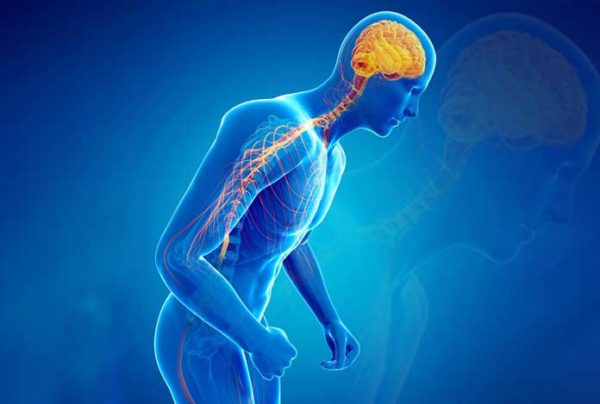
The topic of motor unit recruitment and its relation to power output is directly intertwined. While power and maximum strength are interconnected, power focuses on how efficiently and fast motor neurons can recruit the muscle fibers it innervates. This ability to utilize everything the body has to offer is influenced by how well the central nervous system can communicate appropriately with the body. As movements become more complex the necessity of “neural coordination” becomes more important. Inter- and intramuscular coordination are two terms that can better explain what it means to have neural coordination. Intermuscular coordination describes how different muscles work together. Intramuscular coordination has to do with how fibers within a muscle work together. A simple example to visualize intermuscular coordination would be a game of tug-o-war. All people need to work together and pull the rope at the same time, synergistically for the best chances of winning. The same idea needs to take place within the muscle. Athletes need to be able to use all the available fibers, firing in sync to be able to produce a higher output.
Periodization
 Strength and power both need to be addressed and focused on in every athlete’s journey. But, just like anything else in life, there must be some type of structure and plan. Keeping the idea of progressing over time in mind, it is best to incorporate the structure that sports periodization can offer. Periodized training yields better strength improvements than non-periodized training.(4) Periodization breaks up training programs into different phases (preparatory, competitive, and transition period) to maximize performance gains, while also taking into account fatigue, allowing the athlete to peak at designated time frames or just stay healthy and continue training throughout the year. An athlete cannot aimlessly go about training without true intent or purpose. Philosophies within training theory can offer some stability and direction when it comes to navigating and organizing the chaos of training.
Periodization and how it relates to strength and power development is key in being able to hone in on what exactly needs to be prioritized to maximize performance. Adding muscle mass and becoming stronger is always a great basic and foundational approach to have when it comes to advancing an athlete. However, sometimes strength is not always the limiting factor. This is when the training’s focus should shift towards power development. An easy way to illustrate this approach would be in a vertical jump test. Athletes can have a lot of muscle and be able to jump high, but they take a long time to get off the ground. This means the limiting factor is primarily their lack of power development. If the opposite happens and the athlete can get off the ground very quickly but has a low vertical jump, then they are limited by their strength. This is why it is important that athletes do not become one-trick ponies and instead train various sections along the force-time curve. Only focusing on one part of the force-time curve such as maximal strength, will solely result in improvements in that section. It may lead to increases in force production, but without touching on other sections there will be a reduction in the time it takes to achieve that force. Training programs that account for this and combine strength and power training have been repeatedly shown to have better athletic performance.(6)
The first step in any programming journey is to identify what is needed by the athlete by completing a needs analysis. A needs analysis is key in figuring out what is necessary to focus on since every athlete is unique with different goals. There are five key building blocks when it comes to training theory and designing a logical program. This approach starts by creating a roadmap to figure out where the individual is and where they want to be. Next, when it comes to programming it is important to shift the focus of training from general to specific throughout an annual or seasonal training plan. The idea of shifting to specific focused training is so that when the athlete is in competitive periods, the program is addressing the specific demands of the activity. Following up on this concept, the principles of overload and adaptation must be taken into account. Training demand must exceed the current capacity to produce an adaptation. This does not mean an individual must train past their current 1RM to achieve these adaptations. But, oscillating variables within training so that the body does not become accustomed to the stress that is being applied. Adaptations are specific to the training. Zooming further into training theory, volume and intensity play a vital role and are the two primary variables to control in training. They should almost always be inversely related. The fourth concept in training theory to keep in mind is that training is cyclical and themes of training will be returned to at every level of training, whether that is a microcycle, mesocycle, or macrocycle. Finally, when designing a program, rest and recovery must be accounted for. Adequate rest and recovery will allow the sought-after adaptations from training to be maximized, but not so much that the athlete starts to detrain.
Conclusion
Training should be a dynamic and ever-evolving process with many variables that can fluctuate throughout an athlete’s journey toward desired outcomes. Being able to identify, organize, and implement key concepts within training will help guide training much better than unorganized garage-style workouts. Everybody wants to become stronger, faster, and more powerful. Understanding the differences between each is the first step in being able to broaden one’s perspective on training. The distinction between strength and power and knowing how they both play a vital role in athletic development will better help optimize and utilize each in their respective domains to achieve specific desired goals.
Having a more philosophical multilateral approach to training by incorporating skill, endurance, mobility, and realizing how they all interact with each other is essential in producing the best possible performance.(4) Train hard and train smart.
References
- Brooks, G. A. (n.d.). Exercise physiology: Human bioenergetics and its applications. Google Books. Retrieved October 17, 2022, from https://books.google.com/books/about/Exercise_Physiology.html?id=HewoAQAAIAAJ
- Hansen, D. (2017). Plyometric anatomy. Amazon. Retrieved October 17, 2022, from https://www.amazon.com/Plyometric-Anatomy-Derek-Hansen/dp/1492533491
- Kent, M. (2006, December 1). Oxford Dictionary of Sports Science and Medicine. Google Books. Retrieved October 17, 2022, from https://books.google.com/books/about/Oxford_Dictionary_of_Sports_Science_and.html?id=0_5QEAAAQBAJ
- Lumintuarso, R. (2019, February 1). Multilateral training model in sport performance. Multilateral Training Model in Sport Performance Atlantis Press. Retrieved October 17, 2022, from https://www.atlantis-press.com/proceedings/icssh-18/55914048
- MR;, W. T. D. T. D. V. F. M. V. E. (n.d.). Comparison of periodized and non-periodized resistance training on maximal strength: A meta-analysis. Sports medicine (Auckland, N.Z.). Retrieved October 17, 2022, from https://pubmed.ncbi.nlm.nih.gov/28497285/
- Rate of Force Development (RFD). Science for Sport. (2021, January 13). Retrieved November 2, 2022, from https://www.scienceforsport.com/rate-of-force-development-rfd-2/










This was very helpful and well articulated . a colossal amount of information was shared and dissected. so i say thank you to the Authors and editors.
I thoroughly enjoyed reading this, and got much out of insight of it, I believe every athlete should have a basic understanding of stuff like this. Thanks so much :).