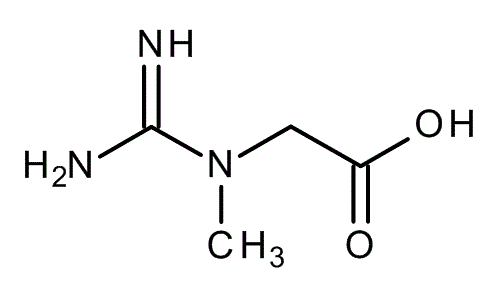
Creatine for Performance and Wellness by Earl Wilcox
[This is a guest blog by Earl Wilcox. Earl is a graduate from the Kinesiology program at the University of North Carolina at Greensboro. Earl currently possesses his CSCS from the NSCA and is an Applied Sports Science Intern at Athletic Lab.] Creatine is one of the top supplements of choice for increasing athletic performance. According to the University of Maryland Medical Center, Americans spend around 14 million dollars a year on creatine supplementation. The main draw to supplementing with creatine is that it can help promote greater changes in muscle mass, body composition and strength gains when combined with the proper training regimen. However, supplementation may not just be for elite level athletes and those who are trying to look good come beach season. There are now studies that show creatine supplementation may in fact help in the treatment of Parkinson's disease as well as help prevent sarcopenia and traumatic brain injuries. Before we get into how creatine can help prevent these particular issues, I believe it is important to explain what creatine is and how it works. First of all, creatine is a naturally occurring substrate in the body and can be found in most animal-based proteins. It is used during the resynthesis of ATP. Think of ATP as the currency the body uses to perform any task; if you spend too much of it, you become unable to perform said task. The body has three different ways to produce ATP, one of which uses creatine. The phosphocreatine system. The phosphocreatine system can produce a vast amount of ATP, however it is limited to producing energy for up to 6-10 seconds. The phosphocreatine system would be like driving a Ferrari in a cross [...]