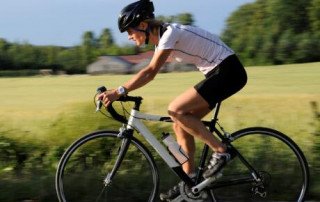
Zone 2 Cardio for Heart Health

In the realm of cardiovascular fitness, Zone 2 training has emerged as a powerful tool to optimize endurance, enhance fat metabolism, and promote overall cardiovascular health. This blog post aims to shed light on the benefits, principles, and practical applications of Zone 2 cardio, guiding fitness enthusiasts toward a more effective and sustainable training regimen. Understanding Zone 2 Cardio There are 5 Zones of Aerobic activity. Zone 2 refers to a specific heart rate zone that falls within a moderate intensity range—typically around 60-70% of your maximum heart rate. This zone allows individuals to train at an intensity where the body primarily utilizes fat as its primary energy source, promoting endurance and minimizing reliance on carbohydrates. Benefits of Zone 2 Cardio Exercise within the Zone 2 level of intensity provides a range of benefits. Improved Aerobic Capacity Training in Zone 2 enhances your aerobic capacity by strengthening the cardiovascular system. This leads to increased oxygen delivery to muscles, improving endurance and stamina. Efficient Fat Metabolism The moderate intensity of Zone 2 cardio encourages the body to burn fat for fuel, making it an excellent choice for those aiming to lose weight or improve body composition. Enhanced Recovery Zone 2 workouts are less stressful on the body compared to higher-intensity training. This allows for more frequent sessions and quicker recovery, reducing the risk of overtraining. Better Endurance Performance By developing a strong aerobic base, athletes can improve their performance in endurance activities such as running, cycling, and swimming. Principles of Zone 2 Training As with all things training, there are key principles you want to follow to optimize your results. For Zone 2 training, we'd suggest the following: Calculate Your Zone 2 Heart Rate Determine your [...]

By |2024-05-27T09:56:14-04:00December 28th, 2023|Training Info|0 Comments

Mike Young lectures at The Running Summit

Athletic Lab's Dr. Mike Young provided 2 lectures at The Running Summit in Rock Hill, SC.  The summit was held at Winthrop University on December 9 and 10. The conference featured top national and international experts in the field of endurance running and speed development blending a mixture of cutting edge science with practical coaching advice. Attendees ranged from high school, collegiate, and club levels along with medical professionals and strength and conditioning coaches. If you are interested in having Dr. Young and any other Athletic Lab staff lecture or provide a private workshop for your organization please contact us for details.

By |2023-12-12T08:27:29-05:00December 12th, 2023|News|0 Comments

Building Effective Sprint Training Workouts for Distance Runners By Jan Alexander

[This is a guest blog by Jan Alexander. Jan is a Certified Strength and Conditioning Specialist through the National Strength and Conditioning Association. His athletic background includes running, cycling, triathlon, and basketball. He is currently taking part in the Athletic Lab Coaching Mentorship program.] Distance runners from the 5k to the Marathon have no shortage of options to guide training decisions while peaking for that next big race. Many programs provide interval workouts to challenge the aerobic pathways needed to hammer a chosen race distance whether that be a 5k or full-on 26.2 marathon distance. These interval workouts are all incredibly valuable at preparing runners for grinding out the effort to hit that next PR (personal record), while an overlooked and undervalued training adaptation for distance runners is developing pure sprint speed. Studies have proven that sprint speed is a predictor of top performance in distance running events. Sprinting improves running economy by making your top speed faster, which means that when you get faster, the pace you ran that felt hard before feels less hard. On top of that, sprint sessions are downright fun! While running track in high school, I envied the sprinters who ran for a few seconds, and stood around for what seemed like eternity. Here, we will dive into why you should add sprinting to your training plan and give you some ways to fit sprints into your weekly mileage without sacrificing volume. Why You Should Add Sprint Training Sessions Sprint training can provide training benefits beyond just adding variety to your routine. As David Roche and Megan Roche, MD make clear in their book The Happy Runner, “Running economy is influenced by biomechanics, neuromuscular circuitry, and aerobic development (Roche [...]

By |2023-04-12T09:11:35-04:00October 26th, 2022|Training Info|0 Comments

Jason LeDoyen completes Badwater 135

Longtime Performance Fitness member and Endurance standout Jason LeDoyen recently completed the prestigious Badwater 135 race. The world-renowned 135 mile ultra marathon has a rigorous qualification standard that brings together just 100 of the world's toughest athletes to race against one another and the elements. The race starts in Badwater, Death Valley and finishes at Whitney Portal at 8,300 feet (2,530m) of elevation. The course covers three mountain ranges for a total of 14,600 (4450m) of cumulative vertical ascent and 6,100 (1859m) of cumulative descent. Whitney Portal is the trailhead to the Mt. Whitney summit, the highest point in the contiguous United States. 2017 marked 40th running of the event in which Jason finished 39th overall.

By |2017-08-09T01:08:54-04:00August 9th, 2017|News|0 Comments

The Achilles Heel of the Treadmill by Erin Ritterbusch

[This is a guest blog by Erin Ritterbusch who is currently an intern at Athletic Lab. Erin is a recent graduate of Auburn University where she received her Master's degree in Exercise Science with a concentration in biomechanics.] Growing up, my dad, an orthopedic surgeon, always told me to be wary of the treadmill. I really never understood those implications until I delved into the biomechanics of running during my master's program. Surprisingly, I was not able to find a lot of research articles on this topic. Anyone who has run outside as well as on a treadmill can attest to the fact that these are two very different feelings. However, does this mean that we are more susceptible to injury? I believe it does because we have to alter the way that we run in order to compensate for what is propelling this motion. When we run on flat ground, we are using our own momentum to push us forward to accelerate, to maintain, or to slow down. However, on a treadmill, the belt below us is pulling us backwards with every step we take. An article I came across on triathlete.com written by "The Gait Guys", as they are known, made some very strong points about how exactly the treadmill affects your stride and muscles. To make a comparison, running on the treadmill is similar to running downhill. The backward motion of the belt catches the heel and pulls the forefoot onto the belt when your lead foot comes into contact with the treadmill belt. This accelerated motion demands a higher level of muscle strength in the anterior part of your shins. This is what causes such a prevalence of shin splints in [...]

By |2017-04-12T19:28:20-04:00December 16th, 2016|Training Info|0 Comments

Doretta Gaudreau & Adam Kohn run Rock n’ Roll Marathon

Director of Healthy Living, Doretta Gaudreau and Performance Fitness member Adam Kohn completed the 2015 Raleigh Rock n' Roll Marathon. The race took the streets of downtown Raleigh on Sunday, April 12th. Here's the course map that the competitors had to run. Adam Kohn completed the 26.2 mile race in 3:20:24, which ranked him 30th overall. Doretta finished with a time of 4:01:42. Congrats to Doretta and Adam on their great accomplishment.

By |2017-04-13T10:55:42-04:00April 17th, 2015|News, Training Info|0 Comments

The Effect of Squats on Distance Running Performance by Darius Marsh

[Darius Marsh is a student at ECU and an Athletic Development Intern at Athletic Lab] Distance runners have all heard the myths or opinions that back squats are bad for distance running. Many people and coaches believe in order to become good or increase performance in distance running. You need to stay away from back squatting and just increase your mileage for the week. Unfortunately, this is a mistaken concept by many people today. In reality, the back squat can be beneficial and effective for distance running. When you think about it, most of the muscles being used for the back squat and distance running are the same such as gluteus maximus, hamstrings, and quadriceps. The beneficial effects that the back squat has on distance running are reduced risk of injury, increase in performance, and running posture. People are always concerned with pain and injury when they start distance running. An easy way to alleviate this problem is to implement back squatting into your training at least once or twice a week. "Back squatting will also help in making your muscles stronger surrounding a particular joint and creating more stability for that joint" [1]. These joints, such as the knee, can become more stable and have less pain during long runs. Back squatting can also help with recovery time for your legs after long runs throughout the week. If you're running at least four times a week this will help to lessen the fatigue after runs. As well as reducing the risk of injury, back squatting can help with increasing your performance in distance running. Back squatting a moderate or light amount of weight can help a runner in developing a faster tempo and being [...]

By |2017-04-13T10:56:49-04:00March 18th, 2015|Training Info|6 Comments
Go to Top