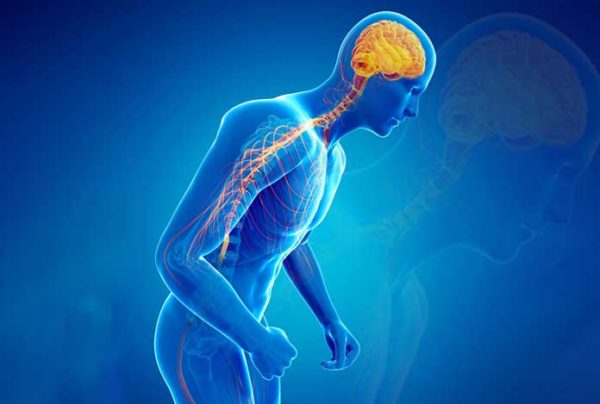
How Exercise Can Help With The Fight Against Parkinson’s Disease by Christian Fortin

[This is a guest post by Christian Fortin. Christian is passionate about strength and conditioning and enhancing sports performance through evidence-based coaching. He recently completed the Athletic Lab Coaching Mentorship Program.] What is Parkinson's disease? Parkinson's Disease (PD) is a neurological disorder that affects muscle movements and brain function. The part of the brain it attacks is the basal ganglia, which is important for the initiation and control of subconscious, gross body movements. It also plays a key role in regulating the intensity of movement parameters. PD mainly affects the production of dopamine in this region, which leads the brain to struggle with regulating movement. Not only is motor function affected, but it can also affect sleep, digestion, an increase in depression and anxiety, and cognitive issues. There is currently no known cure for Parkinson's, but research has been pointing to physical activity as a great way to slow down the effects of Parkinson's (1). The research One study, conducted in the Parkinson's Environment and Gene study in California, followed 555 PD patients and examined sedentary, moderate, and strenuous exercise. People with Parkinson's who participated in strenuous physical activity exhibited lower C-protein levels. This is important because having higher levels of C-protein can lead to motor deterioration. Another benefit is increased Fc receptor-like 2 (FcRL2) expression, which may regulate B-cell activity and help improve immune function. Participants in the moderate physical activity group also experienced reduced brain inflammation. Meanwhile, sedentary patients had higher levels of inflammation than those in the moderate and strenuous physical activity groups. (7) From this data, we can see that physical activity reduces chronic inflammation in patients with PD. Another study followed 237 patients who had early signs of Parkinson’s disease [...]

By |2026-03-30T16:36:16-04:00February 6th, 2026|Training Info|Comments Off on How Exercise Can Help With The Fight Against Parkinson’s Disease by Christian Fortin

Introduction to Cueing: The Frans Bosch Method by Hanna Cabrera

[This is a guest post by Hanna Cabrera. Hanna is a recent Exercise Science graduate from UNC Charlotte. She is passionate about strength and conditioning and enhancing sports performance through evidence-based coaching. She is currently taking part in the Athletic Lab Coaching Mentorship Program.] Frans Bosch is a Dutch sports scientist, author, and renowned coach recognized for his innovative approach to athletic performance, particularly in the areas of biomechanics, motor learning, and strength training. He has lectured in motor learning and biomechanics at Fontys University of Applied Sciences in the Netherlands and has coached elite athletes across multiple sports, including track and field, rugby, soccer, and baseball [1]. Throughout his career, Bosch has challenged traditional strength and conditioning practices that focus on isolated muscle training and strict technical instruction. He promotes a systems-based approach that emphasizes coordination, variability, and adaptability [1,2]. He believes these qualities are essential for developing athletes who can perform effectively in unpredictable, real-world environments. His work has inspired coaches to rethink how they teach movement, highlighting that athletic success depends not only on physical strength but also on the ability to coordinate and adapt efficiently under pressure [1]. Building Athlete Independence Bosch’s coaching philosophy emphasizes the importance of aligning feedback with the athlete’s developmental stage and the specific demands of the sport [1,2]. He believes that athletes develop a stronger sense of self-efficacy when they are given the freedom to explore movement challenges independently rather than relying too heavily on instruction. This approach encourages athletes to take ownership of their learning process and ultimately build confidence in their ability to problem-solve during performance. By creating space for exploration, athletes learn to self-organize and discover efficient movement solutions on their own. Understanding [...]

By |2025-10-21T16:02:41-04:00October 20th, 2025|Training Info|0 Comments

Neuromuscular Adaptations with Aging by Hayden Giuliani

[Hayden Giuliani recently finished her Master's degree at the University of North Carolina Chapel Hill, where she now works as a research coordinator. She is currently in the Coaching Mentorship Program at Athletic Lab.] As we age, there are obvious changes in our performance and the way our body responds to loads or exercise. Many adaptations occur within the body, specifically the muscles, that allow for these more global decrements. But, for some, it seems there is less of a decrease in performance and quality of life. Exercise is the key method in attenuating many of the muscular adaptations with aging. The primary adaptations that occur with aging are decreased muscle size (sarcopenia), decreased muscle strength (dynapenia), and decreased muscle quality, which other muscle architectures and structural adaptations contribute to. With a growing number of older adults, this is a very relevant topic to discuss. Muscle Size Sarcopenia differs from atrophy in that it occurs despite lifestyle and weight changes. Beyond the overall decrease in lean mass and inherent increase in body fat percentage, research has shown that muscle size decreases 25-36% in the thigh musculature with aging, compared to younger adults. (Lexell, Overend) An invasive study by Lexell and colleagues found that size changes within the vastus lasteralis can begin as early as 25 years and decrease as much as 10% by age 50. This loss of muscle is different between the upper and lower body, with the lower body reducing at a rate twice that of the upper body. This decrease in size is caused by a reduction in muscle fiber size and quantity. Neuromuscular fiber changes occur through a continual process of denervation and reinnervation, which leads to not only a loss [...]

By |2017-12-21T10:48:15-05:00November 21st, 2017|Training Info|0 Comments

Periodization of Ice Bathing by Nick Voth

[Nick Voth is currently finishing his degree in Exercise Science from Bowling Green State University, where he competes on the Cross Country team. He is an Applied Sport Science Intern at Athletic Lab.] Cold water immersion (CWI) is a common recovery modality employed by athletes to enhance post-exercise recovery. Athletes may use CWI to speed recovery and reduce muscle damage. Two potential arguments can be made regarding CWI. The first is that CWI has been used to speed recovery, allowing athletes to train hard every day. Acute recovery mechanisms of CWI include a reduction in central nervous system fatigue, reduced cardiovascular strain, increased rate of removal of muscle metabolites, and acceleration of return of parasympathetic drive (Ihsan et al., 2016). Vasoconstriction induced by cold temperatures, subsequently followed by vasodilation leads to a multifold increase in blood flow to the tissues (Adamczyk et al., 2016). On the other hand, these acute recovery mechanisms may inhibit the adaptive process that increases adaptation. CWI may lead athletes feeling fresh for subsequent training sessions, however, the timing of this strategy may inhibit crucial adaptations. It is important to find a balance between the acute and chronic implications of CWI before using it as an intervention in training. Dr. Jeff Messer (2013) describes two types of inflammation in a lecture on ice bathing: compensatory and adaptive. Compensatory inflammation may accompany a traumatic injury (ex: joint sprain), while adaptive inflammation is associated with training induced muscle damage. CWI immersion after exercise may inhibit cellular responses associated with adaptation. He argues that cellular and mechanical stress are pre-requisites to adaptation (Messer, 2013). This point brings up speculations as to appropriate timing and use of CWI. If an athlete is in a phase [...]

By |2017-09-13T00:20:10-04:00September 6th, 2017|Training Info|0 Comments

Using a flywheel device for cost effective assessment by Gilson Sampaio Pereira

[Gilson Sampaio Pereira is a master's student at University of Stuttgart, Germany, and Sport Performance Coach. He is currently in the Coaching Mentorship Program at Athletic Lab] In this blog post I will present a simple and cost effective method of assessing concentric and eccentric strength/power during hip extension. Lower limb asymmetries can also be assessed in the same test. The test is a hip extension exercise, with a flywheel device (FD) to generate an eccentric overload. The FD is gaining popularity on the S&C and athletic development scene because it exposes athletes to high loads with minimum equipment. Additionally, there might be superior gains in strength, power and hypertrophy with flywheel training due to an eccentric overload, when compared to traditional resistance training (Maroto-Izquierdo et al., 2017). First, a little background Let's begin by stepping into the literature to better understand why testing hip extension strength could be of value to athletes and coaches. Hip extension is a basic functional movement. The major hip extensors are the spinal erectors, gluteus maximus, biceps femoris (long head), semitendinosus, semimembranosus and adductor magnus. First, compared to knee extension, hip extension is more important in running speed (Schache et al., 2011), jump height (Lees et al. 2004) and back squat (Bryanton et al. 2011). Therefore, the role of hip extension becomes more significant when athletic movements are executed with a high intent. As a logical consequence, a sound S&C coach should favor the development of the hip extensors in their preparation and maintenance phases throughout the year. This was backed up by a study from Contreras et al. (2016) that showed a greater effect of horizontally than vertically loaded hip extension training on sprint acceleration (e.g. hip thrusters). [...]

By |2017-07-15T10:02:39-04:00July 17th, 2017|News, Training Info|0 Comments

Static Stretching and Explosive Activity by Vincent Ragland

[Vincent Ragland is in his last semester as a student-athlete at East Carolina University, pursuing a Health Fitness Specialist Degree. He is currently an Athletic Development Intern at the Athletic Lab] For many years, athletes across the world were taught the importance of static stretching before explosive exercises, such as sprinting, jumping, and throwing. The thought process behind it was that static stretching was a good way to loosen the muscles before exercise and help prevent injuries. Static stretching is, in essence, holding a stationary position and stretching a particular muscle further than its resting length. Some of the more common static stretches include the butterfly stretch, which stretches the inner thighs and hips, and the seated hamstring stretch. Muscles are usually stretched to a point where discomfort is reached, and are usually about 20 - 30 seconds in length. As time went on, researchers ultimately began to discover that static stretching had no noticeable benefits in terms of power output. Instead of better preparing an athlete for athletic activity, static stretching simply elongates and relaxes the muscles, it doesn't get them ready to generate force (Lebo et. Al 2014). In fact, having a small amount of tension and tightness in the muscles helps them to contract and produce more power. By doing static stretches before power based movements, athletes are stretching some of the desired power out of their muscles. I'm sure a lot of you all reading this blog have heard the phrase "a longer muscle is a stronger muscle". Coaches and athletes should be sure not to take this statement out of context. Static stretching does, in fact, lengthen the muscle. As previously stated, muscles need some tension and tightness in them [...]

By |2017-07-01T12:49:10-04:00July 3rd, 2017|Training Info|0 Comments

Exercise is Medicine by Lauren Cowley

[Lauren Cowley is currently a senior at the University of Mount Olive and will graduate in May 2017. She is an Exercise Science Major, and a former NCAA DII Soccer Player. She is currently an Athletic Development Intern at Athletic Lab.] We've all seen how it happens, January comes around and suddenly the gym is full of people, the streets and parks are filled with runners and walkers, all attempting to fulfill their new year's resolution of losing weight or achieving the "new year, new me" status. Then suddenly summer creeps around, and this all happens again with people attempting to lose weight with the aim to fit into that one dress, to look better on the beach on vacation, or even wanting to avoid the embarrassment of not feeling comfortable in summer clothes. First of all, I applaud each and every person who engages in exercise, for taking that step and going to the gym, or for a run, or even just a walk. For some, that's the hardest step of all. Exercise has a multitude of established benefits with minimal negative side effects. These benefits include: weight control, improved body composition, decreased risk of obesity and diabetes mellitus, improved coronary benefits, lower blood pressure, decreased risk of osteoporosis and cancer, improved psychological wellbeing, improved overall quality of sleep and improved cognitive function. Exercise is extremely cost-efficient and is widely accessible at a societal level. Regardless of age, gender or physical ability, everyone and anyone can benefit from exercise. Which is why exercise is commonly regarded as medicine and regularly prescribed by medical practitioners. Through these extensive benefits, an improvement in overall health status and thus, a reduction in risk of chronic diseases and [...]

By |2017-04-12T19:28:01-04:00February 3rd, 2017|Training Info|0 Comments

A Balanced Look at CrossFit by Brandon Hooks

[This is a guest blog from Brandon Hooks. Brandon is a senior at Ferrum College pursuing his degree in Health and Human Performance. Brandon is participating in the coaching mentorship program at Athletic Lab.] CrossFit is based on functional movements at high intensity such as running, jumping, squatting, pushing and pulling. Changing movements during the workout at a high level is a key component to CrossFit. The Workout of the Day (WOD) is the set of routines that are going to be performed for the day and is designed to incorporate a broad range of exercises with a specific number of repetitions per exercise. For example: 100 pull-ups, 100 push-ups, 100 sit-ups, and 100 squats could comprise the WOD. CrossFit is high intensity training. High-Intensity Interval Training (HIIT) implements alternating short anaerobic bursts of exercise followed by recovery periods. This interval is critical for increased fitness. Research has shown that HIIT provides improved athletic capacity and condition and improvement in fat burning. The question that many ask or wonder is that, is CrossFit really good for you? There have been concerns and arguments that CrossFit isn't good for you because of the risk of injuries that are involved with doing certain CrossFit movements such as the kettlebell swing. In CrossFit competitions, the kettlebell swings are done to an overhead extension instead of to shoulder or eye level. Doing a kettlebell swing this way increases the risk of injury. I believe the Russian kettlebell swing is better for someone who is not used to doing those movements or in non-competitive CrossFit. I have seen the benefits and the good results from knowing a person that used CrossFit. This guy was a former Division I basketball player, [...]

By |2017-04-12T19:30:54-04:00August 9th, 2016|Training Info|0 Comments

Delayed Onset Muscle Soreness by Robert Riddell

[Robert Riddell is a Senior at the East Carolina University and is currently enrolled in the Athletic Lab Coach Apprenticseship Program] While many think fatigue and soreness is caused by the accumulation of lactic acid this is an old myth that hasn't died. Lactic Acid For energy, our muscles use glucose and glycogen during exercise. When these energy sources are broken down, our body produces what is called lactic acid. This acid is the "burning" sensation felt when working our muscles, which can also be attributed to low oxygen levels in the muscle, as well as the recruitment of fast twitch fibers. Removing lactic acid from the blood may be aided by performing a "cool down" immediately following exercise. Research indicates that lactic acid levels in the blood return to normal within 40 minutes of a cool down, as opposed to 60 minutes without. Lactic acid, however, is not the reason you are sore after intense exercise. Muscle soreness is something that effects us a day or two after a heavy bout of activity. This is referred to as DOMs or, delayed onset muscle soreness. DOM's in actuality is a type 1 muscle strain associated with pain that restricts movement. Pain varies from light to severe stiffness (Braun). What is soreness Soreness is the result of the breaking down of muscle proteins. Muscle fibers are torn during contractions that produce high force. An inflammatory-repair response is initiated, which is responsible for the pain, tenderness, and immobility of the muscle (Kenney). The body is not used to performing muscle-lengthening exercises. Because of this, eccentric movements cause more damage than concentric movements (Kedlaya). Due to fewer motor units being activated during eccentric than concentric contractions, force is [...]

By |2017-04-12T19:35:38-04:00March 5th, 2016|Nutrition Info, Training Info|0 Comments

Feeling Better With Exercise by Robert Riddell

[Robert Riddell is a Senior at the East Carolina University and is currently enrolled in the Athletic Lab Coach Apprenticseship Program] Millions of adults will experience at least one depressive episode this year. Seasonal affective disorder also known as seasonal depression, is when a person experiences serious mood change during the winter. In fact, about 9.5% of American adults are suffering from depression. Depression is the leading cause of disability, and is attributed with a major loss of productivity at work. It can affect concentration, productivity, alertness, and cognitive function. What does this have to do with exercise you might ask Research guided toward the association between exercise and depression has been increasing since the 1900s, and continues to increase today. Exercise is just as effective as psychotherapy in relieving depressive symptoms. Compared to therapy alone, running coupled with seeing a therapist results in much more effective treatment during the winter, but is not a replacement for professional care (if necessary). There is much less sunlight than in spring and summer, and depending on location, the weather might greatly reduce one's daily activity. Regardless, exercise can be a useful tool during the cold months to combat seasonal depression. Some of the well-known benefits of exercise include reducing the risk of disease, lowering blood pressure and increasing energy. I feel the most effective, yet least used methods of treatment for anxiety and depression is physical activity. Exercise not only changes us physically, but affects our mental state as well. It does so in a number of ways: Releases receptors in the brain called endorphins, chemicals that circulate through the body and reduce the perception of pain. Stimulates norepinephrine, a neurotransmitter that can directly improve mood. Another [...]

By |2017-04-12T19:35:40-04:00March 3rd, 2016|Training Info|0 Comments
Go to Top