Blood Flow Restriction Training by Kyle O’Toole

[This is a guest post by Kyle O'Toole is a Certified Strength and Conditioning Specialist with National Strength and Conditioning Association and a Corrective Exercise Specialist and Certified Personal Trainer with National Academy of Sports Medicine. He is currently an Athletic Development Intern at Athletic Lab and you can reach him on Instagram @beyourownbest4life.] Blood flow restriction training has received a lot of attention lately but many still have questions on the potential benefits. This infographic from Kyle O'Toole provides great insight on when it might be useful.
By |2018-10-29T12:09:14-04:00October 29th, 2018|Training Info|0 Comments

Athletic Lab Sport Performance Podcast: Episode #8 – Q&A with Mike Young

Another Q&A session with Mike Young on all things speed. This will be a two-part series on the research of speed and the application of speed training on the track and in the weight room. Listen to the previous Q&A with Mike HERE and listen to all of the previous episodes on iTunes Discussion topics in Part 1 include: The definition of speed as it relates to the track and field and court sports. Characteristics of acceleration and max velocity. The debate on horizontal vs. vertical forces in sprinting. Debunking some research on horizontal forces in sprinting. Posture and it's impact on speed.  

By |2017-04-12T19:28:58-04:00November 14th, 2016|Podcast|0 Comments

The Benefits of Blood Testing for Performance

Many believe blood testing is something reserved for when you have a medial problem. The reality is that this is simply not the case and new services and technological advances have made blood testing easily accessible to practical anyone. Now, athletes, coaches and fitness enthusiasts can use blood testing to ensure they have what they need for optimal performance. Blood testing can even be used to address small imbalances or even predict potentially larger problems before it's too late. Among the benefits, the information from a blood test can help to make changes that will improve metabolism and cognition, optimize mood, build muscle, and reduce inflammation. Blood tests are practically non-invasive and very easy. They require just a small amount of blood but can provide a significant amount of detailed information including what lifestyle changes you need to make with sleep, training and nutrition to optimize your performance. Everyone's blood is different. And within your unique blood are what is known as biomarkers. Biomarkers are indications of your body's status and provide insight on functions and biological changes. Examining biomarkers through blood analysis gives you a 'look under the hood' at your health and fitness and can be an important advantage for athletes and fitness enthusiasts. Blood samples in test-tubes A good test will provide you with not just numbers on the biomarkers but meaningful insight in to where you stand against normative population data. This should be based on things like age, gender, activity level. The biomarkers or blood panel you choose to examine should also be selected carefully. The most useful blood tests for healthy individuals involve looking at biomarkers for nutrition status hormones and inflammation. Nutritional tests typically look at [...]

By |2017-04-12T19:30:21-04:00August 26th, 2016|Nutrition Info, Training Info|2 Comments

Can the brain CAUSE injury? by Eddie Arvelo

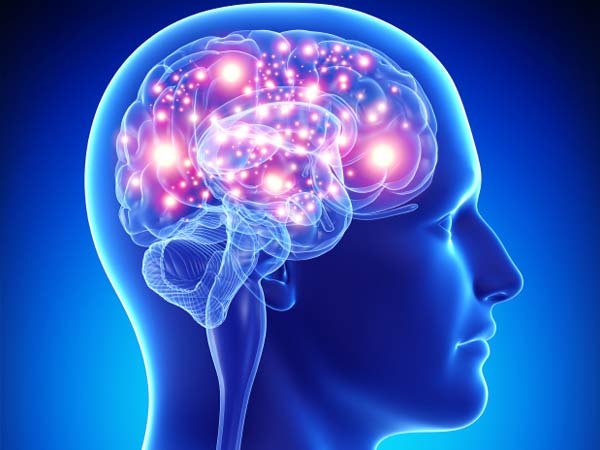
[This is a guest blog by Eddie Arvelo. Eddie has a Bachelors of Science in Exercise Science from UNC Charlotte and is also a certified personal trainer. He is currently full time Athletic Development intern at Athletic Lab.] The human brain is an incredibly powerful tool that rarely receives the attention it deserves. First, we should discuss some basic nomenclature of the brain. A piece of brain tissue the size of a grain of sand contains 100,000 neurons and 1 billion synapses that all communicate with each other. Brain information moves anywhere from 1 mph to 268 mph. Our brain generates about 12-25 watts of electricity which can power a low wattage LED light. Recent research also shows that an athlete's brains can focus more on a task than others. In a 2015 study named The Athlete's Brain: Cross Sectional Evidence for Neural Efficiency during Cycling Exercise, it was shown that cyclists with high levels of aerobic fitness who completed cycling of submaximal exercise had lower brain activity compared to their peers. It showed individuals with higher aerobic power had better neural efficiency. Another study in 2012, named Individual Differences in Expert Motor Coordination associated with White Matter Microstructure in the Cerebellum, showed karate experts had greater white matter changes in their brains than novice karate athletes. This is likely because of complex synchronization of movements of the upper limbs and trunk. White matter is associated with how the brain learns and functions. What does this all mean It is the combination of physical and mental readiness that separates the greatest athlete in the world from the rest of us.? Generally speaking, coaches, fitness professionals, physicians, physical therapist, and athletic trainers focus on physical development [...]

By |2018-11-13T15:01:10-05:00July 13th, 2016|Training Info|0 Comments
Go to Top