
Blood Testing for Optimal Health and Performance

In the pursuit of optimal health and peak athletic performance, many factors come into play, such as training, nutrition, and recovery. However, one often overlooked tool in this quest is blood testing. Regular blood testing is not only crucial for monitoring and maintaining overall health, but it can also be a game-changer when it comes to maximizing athletic performance. Evidence-based wellness has become an emerging industry due to its evidence from clinical and research data.  For this reason, Athletic Lab is a longstanding partner with InsideTracker - the industry leader in providing actionable and individualized information on how to improve your health span and performance based on your own blood. In this blog post, we will explore the pivotal role of blood testing for health and athletic performance. Blood Testing: The Window to Your Health Baseline Health Assessment: Blood testing provides a window into your internal health. It helps in establishing a baseline for various biomarkers, including cholesterol levels, glucose levels, and liver function. This baseline helps identify potential issues before they become serious health problems. Early Disease Detection: Regular blood tests can detect the early signs of various diseases, including diabetes, heart disease, and certain cancers. Detecting these conditions at an early stage allows for more effective treatment and better long-term outcomes. Nutritional Status: Blood tests can reveal essential information about your nutritional status. For instance, they can highlight vitamin and mineral deficiencies, which, when addressed, can lead to improved energy levels and overall well-being. Blood Testing for Performance Enhancement Optimizing Nutrient Levels: Blood testing can pinpoint nutrient deficiencies, such as iron, vitamin D, or magnesium, which are vital for athletic performance. Addressing these deficiencies can result in increased energy, endurance, and strength. [...]

By |2023-11-09T08:51:11-05:00November 10th, 2023|Nutrition Info, Training Info|0 Comments

Building Effective Sprint Training Workouts for Distance Runners By Jan Alexander

[This is a guest blog by Jan Alexander. Jan is a Certified Strength and Conditioning Specialist through the National Strength and Conditioning Association. His athletic background includes running, cycling, triathlon, and basketball. He is currently taking part in the Athletic Lab Coaching Mentorship program.] Distance runners from the 5k to the Marathon have no shortage of options to guide training decisions while peaking for that next big race. Many programs provide interval workouts to challenge the aerobic pathways needed to hammer a chosen race distance whether that be a 5k or full-on 26.2 marathon distance. These interval workouts are all incredibly valuable at preparing runners for grinding out the effort to hit that next PR (personal record), while an overlooked and undervalued training adaptation for distance runners is developing pure sprint speed. Studies have proven that sprint speed is a predictor of top performance in distance running events. Sprinting improves running economy by making your top speed faster, which means that when you get faster, the pace you ran that felt hard before feels less hard. On top of that, sprint sessions are downright fun! While running track in high school, I envied the sprinters who ran for a few seconds, and stood around for what seemed like eternity. Here, we will dive into why you should add sprinting to your training plan and give you some ways to fit sprints into your weekly mileage without sacrificing volume. Why You Should Add Sprint Training Sessions Sprint training can provide training benefits beyond just adding variety to your routine. As David Roche and Megan Roche, MD make clear in their book The Happy Runner, “Running economy is influenced by biomechanics, neuromuscular circuitry, and aerobic development (Roche [...]

By |2023-04-12T09:11:35-04:00October 26th, 2022|Training Info|0 Comments

Tapering for Peak Performance by Juraj Šarić

[This is a guest blog by Juraj Šarić. Juraj is a strength & conditioning coach with a masters degree in Kinesiology from the University of Zagreb, Croatia. He has experience coaching at a variety of levels and is currently working as a conditioning coach for boxing. His background is in swimming, waterpolo and martial arts. At the moment, he is taking part in the Athletic Lab Coaching Mentorship program.] Sport professionals across the world are increasingly trying to push the limits of human adaptation. To achieve this goal, without breaking the athlete, coaches are presented with a hard task of managing a very high number of variables that mutually interplay. Training load, volume, frequency, exercise order, RPEs, contraction speed, execution of an exercise, nutrition, sleep, and season time are some of the many variables that should be taken into consideration when designing a training program. It is almost impossible to keep all of these under control, yet as professionals, we should always aim for a “bit of perfection” in our training. Having said that, the main objective of this blog is to help coaches optimize their training variables within a taper in an attempt to elicit peak performance. A typical misconception among coaches is that training less will lead to a drop in performance. Despite this belief, research indicates that fitness levels can be maintained or even improved with proper tapering protocols [1]. Though research and anecdotes provide some guidance on the tapering process, designing an effective tapering program is just as much an art as it is a science [2]. Still, there are evidence-based guidelines which one should follow. What is Tapering? A taper refers to a strategy which is implemented in a period [...]

By |2022-07-28T14:12:02-04:00August 1st, 2022|Training Info|0 Comments

Blood Flow Restriction Training for Muscular Hypertrophy by Juraj Šarić

[This is a guest blog by Juraj Šarić. Juraj is a strength & conditioning coach with a masters degree in Kinesiology from the University of Zagreb, Croatia. He has experience coaching at a variety of levels and is currently working as a conditioning coach for boxing. His background is in swimming, waterpolo and martial arts. At the moment, he is taking part in the Athletic Lab Coaching Mentorship program.] INTRODUCTION In modern day sport, it is critical to implement training strategies wisely. The biggest question for sport performance professionals is: What to develop and which physical qualities to address in a short amount of time you have with your athletes? Given the fact that muscle cross-sectional area greatly correlates to muscular strength, some training plans should be hypertrophy focused [1]. Moreover, bodybuilding is a sport which primarily puts an emphasis on muscular growth. If we were to follow old-school bodybuilding ideology, we would like to introduce more modalities into our training program. As Arnold Schwarzenegger once said: “You have to go and use the SHOCKING PRINCIPLE. You gotta shock the muscle.” Having said that, there is a growing body of evidence suggesting improvements in muscle mass when implementing blood flow restriction training. Therefore, this can be a viable option to use when hypertrophy is the main goal of the training. CAUSING MUSCLE HYPERTROPHY Before going into actual training for inducing positive changes in a cross sectional-area (CSA), we have to consider the physiological background which causes muscular hypertrophy. It is hypothesized that there are three primary mechanisms that trigger muscle growth [1]: Mechanical tension Metabolic stress Muscle damage (microtrauma) Both mechanical tension and metabolic stress act together to facilitate a great number of secondary associated [...]

By |2022-07-27T11:21:56-04:00July 27th, 2022|Training Info|0 Comments

Does Caffeine help your sports performance? by Jarod Connell

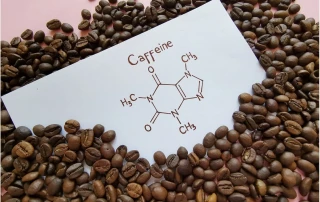
[Jarod Connell graduated from NC State University with a degree in Human Biology and a minor in Sports Science. He is certified as a NASM-CPT and is taking part in the Athletic Lab Coaching Mentorship program.] Caffeine has long been used as an ergogenic aid in sports. How much do we really know about it or how much it helps us? Caffeine has been used in sports since the early 1900s due to its perceived ability to stimulate muscle and overcome mental fatigue (17). However, it wasn’t until the 1940s that notable research began to appear (17). In this blog, we’ll explore what caffeine does within our bodies and how it impacts sports performance. What does caffeine do in our body? Caffeine is shown to inhibit adenosine receptors and mostly targets the A1 and A2 adenosine receptors. This leads to increases in pain suppression, firing rates of motor units, and neurotransmitter release (1). Adenosine is shown to decrease some Central Nervous System (CNS) neurotransmitters, including dopamine, serotonin, acetylcholine, glutamate, and norepinephrine. This means adenosine slows down our neural activity and makes us sleepy (22). Because caffeine’s chemical structure resembles adenosine it inhibits adenosine from binding and binds to the receptors itself, increasing the concentration of these neurotransmitters, and thereby actually increasing neural activity and alertness (1). Caffeine was previously believed to increase lipolysis, the breakdown of fats for energy, saving our muscle glycogen from being used, and release of calcium from our intracellular stores. However, a study in 2010 by Davis and Green reported that a standard dose of caffeine doesn’t indicate that these mechanisms play a large role (14). This lines up with what was found in the Institute of Medicine article which reports [...]

By |2023-04-12T09:11:38-04:00July 13th, 2022|Nutrition Info|0 Comments

Heart Rate Variability Based Training by Jason Winegar

[Jason is currently pursuing his masters degree from Marshall University in kinesiology with an emphasis on exercise physiology. He is a high performance tennis coach with experience coaching nationally and internationally ranked players all over the world. Jason is a certified High Performance Tennis Coach with the USTA and hold certifications with the USPTA and the iTPT. He is taking part in the Athletic Lab Coaching Mentorship program.] Most athletes understand the concept of progressive overload. The body must be stressed with a workout followed by a period of recovery to improve fitness. Traditional periodized training follows a predetermined training schedule, whether linear, block, or any other variety. Training days and rest days are assigned in advance. These training progressions have been proven to be more effective than random training. However, they do not consider how an individual responds to the training. If someone is feeling run down or sick or is going through an exceptionally stressful time at work, their training will be compromised. For this reason, the traditional model may not be the most effective training approach for some people. There is an alternative to typical periodized training called heart rate variability (HRV) training. HRV training differs from standard periodized training in that training plans are flexible. An HRV measurement in the morning determines the volume/intensity of training. The most difficult workouts are assigned on days when HRV is high. Rest days occur when HRV is below average. HRV training can account for individual training and life stress responses, theoretically creating more optimal training. What is Heart Rate Variability? A resting heart rate of 60 beats per minute (bpm) means the heartbeats 60 times in one minute. As impressive as the heart is, [...]

By |2022-04-20T16:04:59-04:00April 20th, 2022|Training Info|0 Comments

Beatriz Fernandes provides Menstrual Cycle Based Training lecture for Turkish Coaches

Athletic Lab's Beatriz Fernandes, MS recently provided a streaming lecture for Turkish strength and conditioning coaches. The title of the lecture was Menstrual Cycle based Training - Theory and Practicality. The streaming lecture was hosted by Quadroathletics and Medikurs. The Turkish companies hosted an Athletic Lab Coaching Academy CHPC Level 1 course in 2019 and was slated to host multiple Academy courses in 2021 that were ultimately delayed due to COVID-19. Beatriz discussed the the impact of the menstrual cycle on training and recovery and provided a practical applications on how to implement these considerations. Fernandes previously spoke to the group earlier in 2021. The Athletic Lab Coaching Academy has a scheduled CHPC Level 2 course hosted by Quadroathletics in Instanbul later in 2021. If you are interested in having Dr. Young and any other Athletic Lab staff lecture or provide a private workshop for your organization please contact us for details.

By |2021-12-05T10:40:15-05:00December 6th, 2021|News|0 Comments

Part I: Female Physiology and Sports (vs Men) by Beatriz Fernandes

[This is a guest post by Beatriz Fernandes. Beatriz received her BS in Exercise Science, MS in Management and is currently participating in the Athletic Lab Internship Program. Beatriz has experience coaching at a variety of levels in the US and over in Europe and holds certifications with US Soccer.] Women are not small Men. Stop eating and training like one? (Sims, 2016). This series will start on this note hoping to reach all female athletes, be it a newbie in physical exercise, a 5k weekend runner, a daily CrossFitter, or a professional athlete, as well as their female and male coaches. It has been a long time since sports scientists agreed upon the difference between children and adults acknowledging the anatomical and physiological differences between them when prescribing exercise. If it is so obvious to make that distinction, should we also make a distinction between men and women? After all, there is a whole list of evident musculoskeletal, physiological, and endocrine differences between the two genders. Could we be bypassing the important fact that women are women and men are men? If we were to tailor training programs accordingly, what would they look like? Research suggests that coaches should be considering the female's unique physiology in order to design a proper and beneficial training program. When compared side by side with men, women, indeed, might have some disadvantages on the physical performance field. For example, the hormones which tell our bodies when to eat, sleep, grow, and many other basic needs are pretty stable in men; however, in women, the story is different and that story is centered on the menstrual cycle (Sims, 2016). What are those differences, and how do they impact in [...]

By |2020-10-10T13:59:46-04:00October 10th, 2020|Training Info|0 Comments

Complex Training Simplified by Kyle O’Toole

[This is a guest post by Kyle O'Toole is a Certified Strength and Conditioning Specialist with National Strength and Conditioning Association and a Corrective Exercise Specialist and Certified Personal Trainer with National Academy of Sports Medicine. Kyle recently completed the Athletic Development Mentorship at Athletic Lab and you can reach him on Instagram @beyourownbest4life.] This infographic by Kyle O'Toole is a great compliment to his recent post on Complex Training.

By |2018-11-28T11:32:06-05:00November 29th, 2018|Training Info|0 Comments

Complex Training by Kyle O’Toole

[This is a guest post by Kyle O'Toole is a Certified Strength and Conditioning Specialist with National Strength and Conditioning Association and a Corrective Exercise Specialist and Certified Personal Trainer with National Academy of Sports Medicine. Kyle recently completed the Athletic Development Mentorship at Athletic Lab and you can reach him on Instagram @beyourownbest4life.] Complex training is a term that many strength and conditioning coaches are using and who also understand the vital role it plays in the development of athletes where a combination of strength and speed is necessary. Every athlete needs to get bigger, faster, stronger, and coaches who can meet those needs are the ones who are utilizing complex training to its fullest potential. Complex training provides athletes with greater development of motor capabilities and strength qualities through the use of varied external loads and speeds of movement (Athletes Authority, 2017). It is widely considered the most effective training method in development of the force velocity curve. The key principles to complex training lie in the understanding of the force velocity curve and the importance it has on overall athlete development. Just understanding what the curve represents won't be enough to push athletes to their peak. As a coach you need to realize how to best train all aspects of the curve. Force Velocity Curve The force velocity curve is a simple graphic that shows the relationship between force and velocity. Force and velocity have an inverse relationship with each other. As force production increases, velocity decreases and vice versa. Think of the speed of the bar while performing a barbell bench press. You can move the bar much quicker while warming up (lower force, higher velocity) compared to performing a 1RM [...]

By |2018-11-28T11:28:15-05:00November 28th, 2018|Training Info|1 Comment
Go to Top