What’s More Important: Strength or Power?

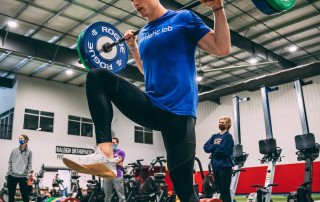
[This is a guest blog by Caleb O’Brien who is a recent graduate from Appalachian State with a bachelor’s in exercise science. He grew up playing soccer his whole life, competing in the US Youth National League. He is currently taking part in the Athletic Lab Coaching Mentorship program.] Strength and power are often two terms that people throw around in the gym interchangeably. While both affect how well a lift is accomplished, they are not the same. Strength measures how much force your muscles can produce. Power, sometimes referred to as explosive strength can be described as the amount of work performed over a given period of time. The main factor that differentiates the two is that power accounts for the amount of time it takes to overcome the resistance. The variable of time refers to how quickly, or the speed at which an individual can execute the movement. In layman’s terms, power is the product of two key components; speed and strength. Outside of the technical differences within each of their respective definitions, the application of either strength or power heavily influences how one trains and formulates a program to favor one more so over the other. Three important variables that scope any training program and especially strength training are intensity, volume, and frequency. Intensity, simply put, is the amount of energy required per unit of time. Intensity can be measured by a handful of methods, such as RPE (rating of perceived exertion) and RIR (reps in reserve), which are two quick simple ways to gauge an individual's intensity day to day. Basing intensity off percentages of 1RM or rep maxes is a great way to hone in on what an athlete’s working [...]


By |2022-11-10T23:00:54-05:00November 11th, 2022|Training Info|2 Comments

Strength Training for Cycling Performance by Jason Winegar

[Jason is currently pursuing his masters degree from Marshall University in kinesiology with an emphasis on exercise physiology. He is a high performance tennis coach with experience coaching nationally and internationally ranked players all over the world. Jason is a certified High Performance Tennis Coach with the USTA and hold certifications with the USPTA and the iTPT. He is taking part in the Athletic Lab Coaching Mentorship program.] Cycling is a sport of very slim margins. Countless hours are dedicated to time in the saddle riding hundreds of miles a week, even in the most extreme conditions, all in an attempt to gain a few seconds here or a watt or two there. Traditionally, the way to improve at cycling was to cycle… a lot. Professional level cyclists average over 20 hours a week of riding. Even recreational riders at the competitive level average 10+ hours a week. Eventually, there is a point of diminishing returns. Over the last 20 years, the science of training has improved dramatically. Periodized training blocks with zone-specific interval training and load monitoring have led to more effective and efficient training. However, there is one area that research has shown can lead to dramatic gains that most cyclists completely ignore; that is getting off the bike and heading to the gym. Strength training, if done correctly, will lead to improvements in cycling performance [1-7]. Despite numerous scientific studies supporting this claim, cyclists have long avoided trading in time on the bike for some time in the gym. There are a few prominent arguments that seem to persist. One is the fear of bulking up. In cycling, weight matters. The more mass that must be moved, the more energy must be [...]

By |2022-02-14T18:24:19-05:00February 16th, 2022|Training Info|0 Comments

Peristaltic Pulse Dynamic Compression by Liam Sutton

[This is a guest blog by Liam Sutton. Liam is a senior at Ball State University working towards his bachelor’s degree in exercise science with a concentration in basic and applied sciences. He hopes to attend Australian National University’s Master of Neuroscience program after graduation. He is currently participating in the Athletic Lab Internship Program.] Athletes have always looked for advantages in training and competition to obtain an edge over their competition. The scientific and performance coaching communities have ongoing collaboration in enhancing athlete performance; methods include using optimized training schedules, better nutrition, higher quality sleep, and emerging forms of therapy. The goals of these collaborations are to enhance performance of athletes by reducing fatigue and soreness as well as enhance and accelerate sport specific training adaptations. Elite athletes undergo rigorous training that leads to muscle microtrauma and inflammation, manifesting itself in pain, discomfort, and short-term performance decreases. Reducing, counteracting, and recovering from these body traumas is the primary goal of many emerging therapies aimed at athletes. The sport world is rapidly embracing therapeutic arts and sciences to obtain the benefits of recovery methods designed to combat the entire spectrum of fatigue related performance impairments. This is evidenced by national Olympic, business, and other organizational entities building expensive facilities designed around the research and implementation of recovery modalities and methods to enhance recovery and adaptation. One method that has received recent attention is muscle and limb compression. There are two types of compression therapy. Static compression uses specific garments designed to compress the limbs and torso, while dynamic compression involves manual compression such as a massage and mechanical compression using special devices such as sleeves that envelop limbs and inflate consecutively in compartmentalized cells. This [...]

By |2021-10-04T12:34:32-04:00October 4th, 2021|Training Info|0 Comments

The Protein Athletes Aren’t Consuming But Should Be by Frank Muntis

[Frank Muntis recently finished his Master's degree in Exercise Physiology from the University of Louisville and is currently in the Coaching Mentorship Program at Athletic Lab.] The internet is full of information about different nutritional topics and it can be difficult at times to sift through all the information to find practical, research-backed strategies to improve health and performance. When talking about sports nutrition it is common to hear discussions of the benefits of whey protein, casein, fish oil, carbohydrates or other various topics for the health and performance of athletes and these topics deserve discussion. There is, however, one nutritional supplement that I have found to truly make a difference in my well-being and performance collagen. Collagen is a protein that is found throughout your body in your bones, skin, tendons, ligaments, hair, nails and more. In supplemental form, collagen is usually derived from cows and is also commonly used as gelatin in cooking. About 30% of the body's protein consists of collagen. While much of the research on collagen supplementation is geared towards clinical populations, the implications of the findings from these studies shine a light on an area of sports nutrition that can potentially lead to fewer injuries, increased performance, and improved health and wellness. Effects on the Prevention of Injuries The number one goal of any good strength coach or athlete is to prevent injury. Some of the most common injuries in sports are related to connective tissues like tendons, ligaments, and bones with sprains, strains, tears and fractures as some of the predominant injuries. While these are incredibly strong tissues, they also take a greater amount of time to heal and adapt than other tissues. One study by Dr. Steffen [...]

By |2017-11-21T13:59:19-05:00November 21st, 2017|Nutrition Info|0 Comments

Neuromuscular Adaptations with Strength Training by Hayden Giuliani

[Hayden Giuliani recently finished her Master's degree at the University of North Carolina Chapel Hill, where she now works as a research coordinator. She is currently in the Coaching Mentorship Program at Athletic Lab.] So what do we really know about strength training? What happens beneath the surface to increase our strength and power "that ever so desired outcome" Strength training has been growing in popularity not only for sport but also for the general population, but sometimes we don't always understand the benefits it provides for our body. Neuromuscular changes underlie what happens when you strength train, i.e. growth of muscles, increased strength and power and increased anaerobic capacity. We will be discussing both what happens within the muscles and also the brain's communication to them. Before we proceed, I want to be clear about the kind of strength training I am talking about. I am designing this post at the type of strength training that high-level athletes and advanced lifters use. It is designed to impose a progressive overload, with high intensities and athletic movements. I would like to emphasize that strength training should be an 1) overload and 2) progressive in nature. (It should be considered that not all research studies follow this guideline, but the ones mentioned here generally did.) With an organized strength training plan, we typically see increases in strength (either tested as a 1- repetition maximum or maximal voluntary contraction), increases in power and speed, and greater muscle size (hypertrophy). The extent to which these adaptations occur can vary, based on age, gender, and training age. In addition, training load/ intensity, volume, and frequency also play critical roles that I will discuss throughout. In a long-term study by [...]

By |2017-10-23T13:37:48-04:00October 23rd, 2017|Training Info|0 Comments
Go to Top